
How to Store Food Container Lids in a Shallow Drawer
Storing food container lids in a shallow drawer works best when you choose the arrangement by its loaded height. If upright lids catch on the cabinet above, try short flat stacks in separate shallow trays. Use vertical dividers only where the lids and organizer can move through the drawer opening without touching anything.
A drawer that closes when half your containers are in the refrigerator may jam when everything is washed and put away. Plan for the full collection, then check whether you can find and return one lid without rearranging the rest. This guide focuses on empty food-container lids, including what to try before buying an organizer.

Match Your Lids Before Measuring the Drawer
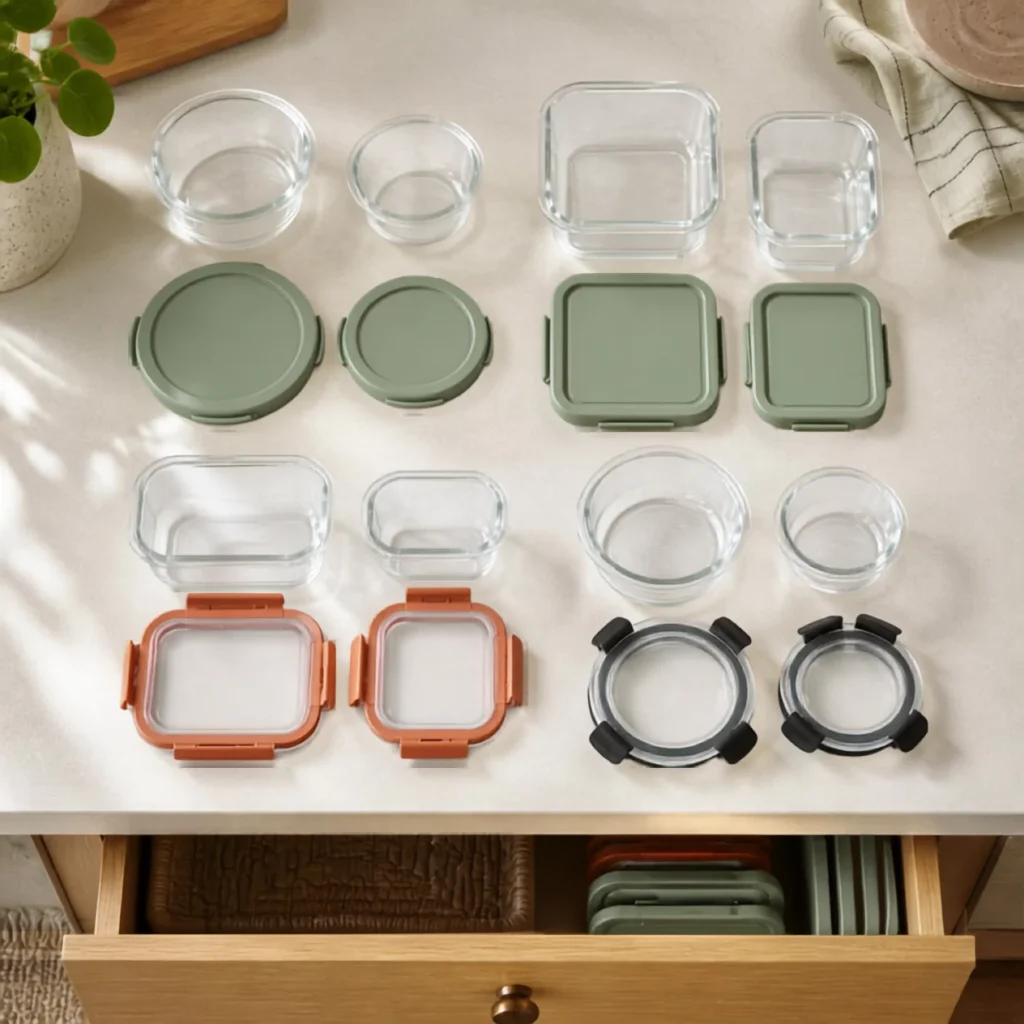
Bring together the clean, dry lids and the containers they belong to. Include pieces in lunch bags, the dishwasher and other cabinets before deciding that a lid has no match. Set unresolved pieces aside while you check.
Group lids by the containers they actually fit. Two lids can look almost identical but have different rims or clips. Even within a brand, compatibility can vary: OXO’s Twist & Stack product page identifies its smaller five-ounce containers as an exception to the shared lid fit.
Keep each compatible group together. That way, choosing a lid from one short stack is useful; digging through a pile of unrelated sizes is not. Check worn or damaged pieces against their manufacturer’s care and replacement guidance rather than buying storage around them.
Measure the Space the Loaded Drawer Can Use
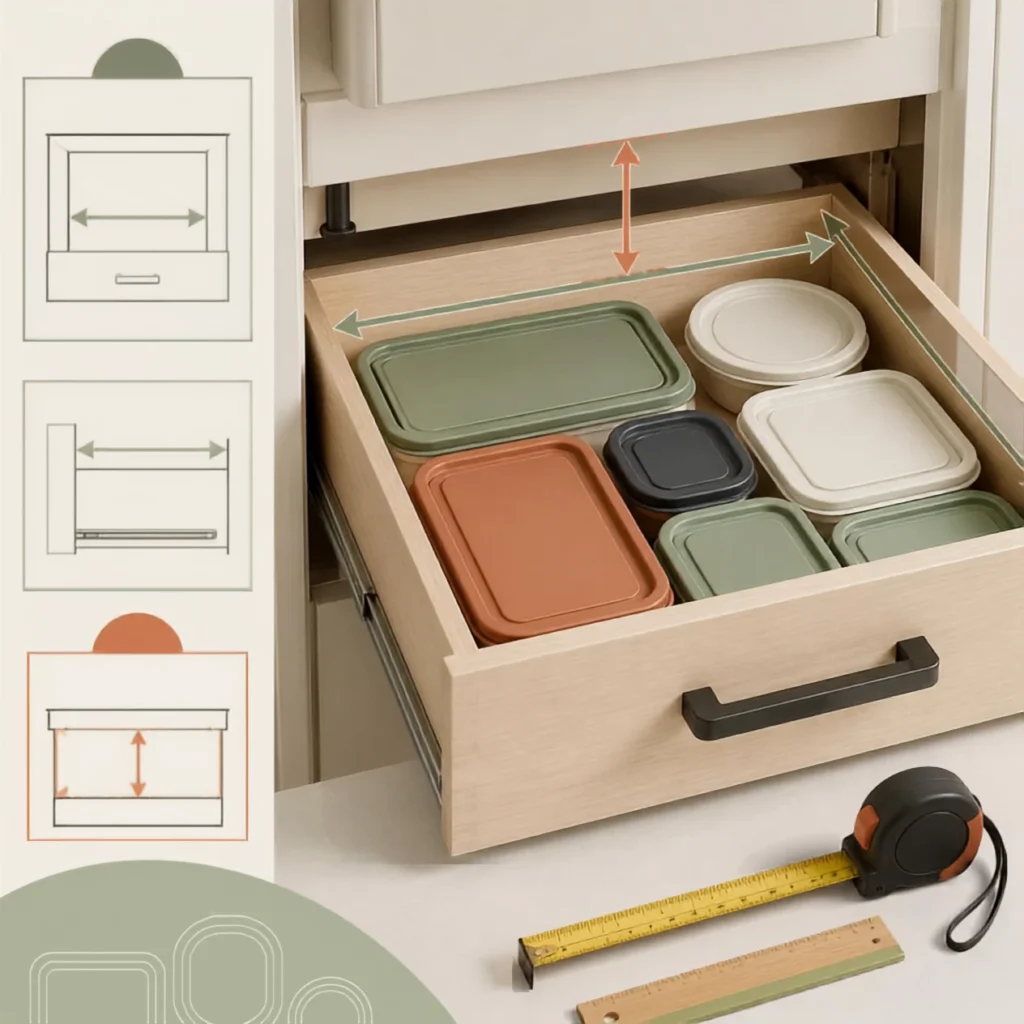
The height of the drawer front does not tell you how tall its contents can be. Look inside the cabinet for a rail, frame or drawer above that reduces clearance as your drawer moves.
- Width: the usable distance between the drawer’s inner sides.
- Depth: the usable distance from the inside front to the back.
- Closing height: the vertical space from the drawer floor to the lowest obstruction along its travel.
Measure with the drawer stationary and keep fingers away from moving hardware. Include any liner or tray base when checking the final height. If an obstruction is difficult to see or measure, do not assume the space is clear.
Then measure the arrangement you intend to store. For upright lids, include rims, tabs and the support beneath them. For flat storage, measure the actual stack rather than multiplying one lid’s thickness: some lids nest together, while others sit unevenly on raised clips.
Why a low organizer can still be too tall when loaded
YouCopia’s StoraLid 24 Lid organizer is listed as 3.3 inches high and accommodates lids up to 9 inches. Those figures describe different things. A tall lid can project well above the rack. Check the tallest point of the loaded arrangement, not just the organizer’s listed height. This is a fit example, not a hands-on product recommendation.
Three Ways to Arrange Food Container Lids in a Shallow Drawer
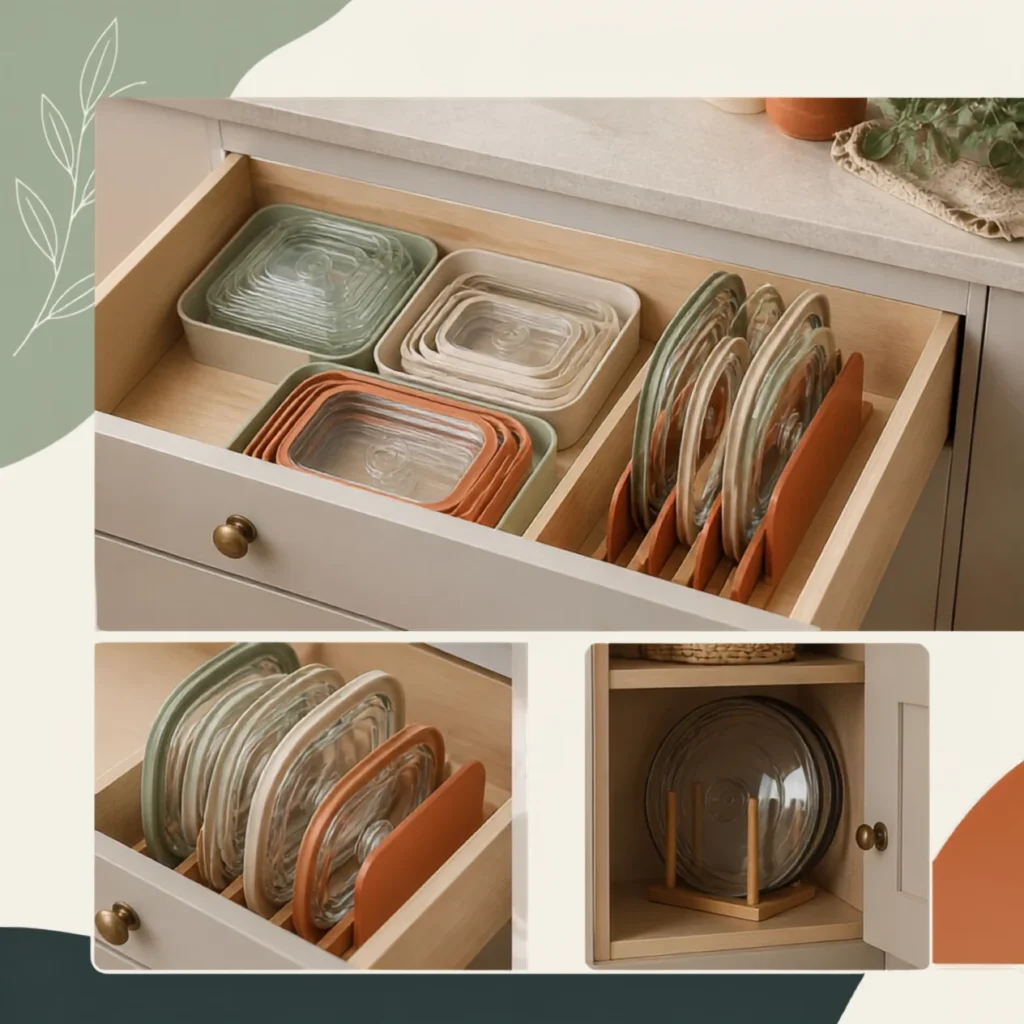
Choose the method that lets the drawer close and keeps matching straightforward. You do not need every lid stored in the same orientation.
| Arrangement | Useful when | Main drawback |
|---|---|---|
| Short flat stacks | Lids are too tall to stand up | Lower lids can be hidden |
| Upright in dividers | The loaded height clears the drawer | Lids may tip or catch if poorly supported |
| Split between two nearby spaces | Only a few oversized lids fail the fit check | Requires remembering a second location |
For flat storage, separate compatible stacks
Use a clean, low-sided tray or removable divider to keep each group from sliding into the next. Leave room to lift a lid by its edge. If retrieving the bottom one disturbs several unrelated lids, split the pile into smaller groups.
For upright storage, check support as well as height
A rectangular lid may fit standing on its longer edge because its shorter dimension becomes the height. Measure that orientation with its clips included. Make sure the slots support the lid without squeezing or bending it, and that removing one lid does not make the others fall across the drawer.
For oversized lids, use a nearby alternative
Keep everyday lids in the drawer and place the few that do not fit beside their matching containers in a suitable cabinet. Do not bend a lid or force it diagonally into a cramped space just to keep the collection together. For allocating the surrounding cabinets, see our small kitchen storage ideas for renters.
A Shallow-Drawer Fit Example
This is an illustrative calculation, not a measured home or tested product. Suppose a drawer has 4 inches of usable vertical clearance along its travel. A round lid measuring 6 inches across cannot stand vertically inside that space, even if the empty rack fits.
Now suppose the same lid lies in a measured flat stack that is 1.5 inches high. A tray base adds another 0.25 inch. The loaded stack reaches 1.75 inches above the drawer floor, below the 4-inch limit. The tray’s sides and every other part of the arrangement must also clear that limit.
This answers only the height question. The tray and lids still need to fit the drawer’s width and depth, leave room for retrieval, and stay clear as it moves. Use your own measurements; these example dimensions are not a standard allowance for every drawer.
Try the Layout Before Buying Anything
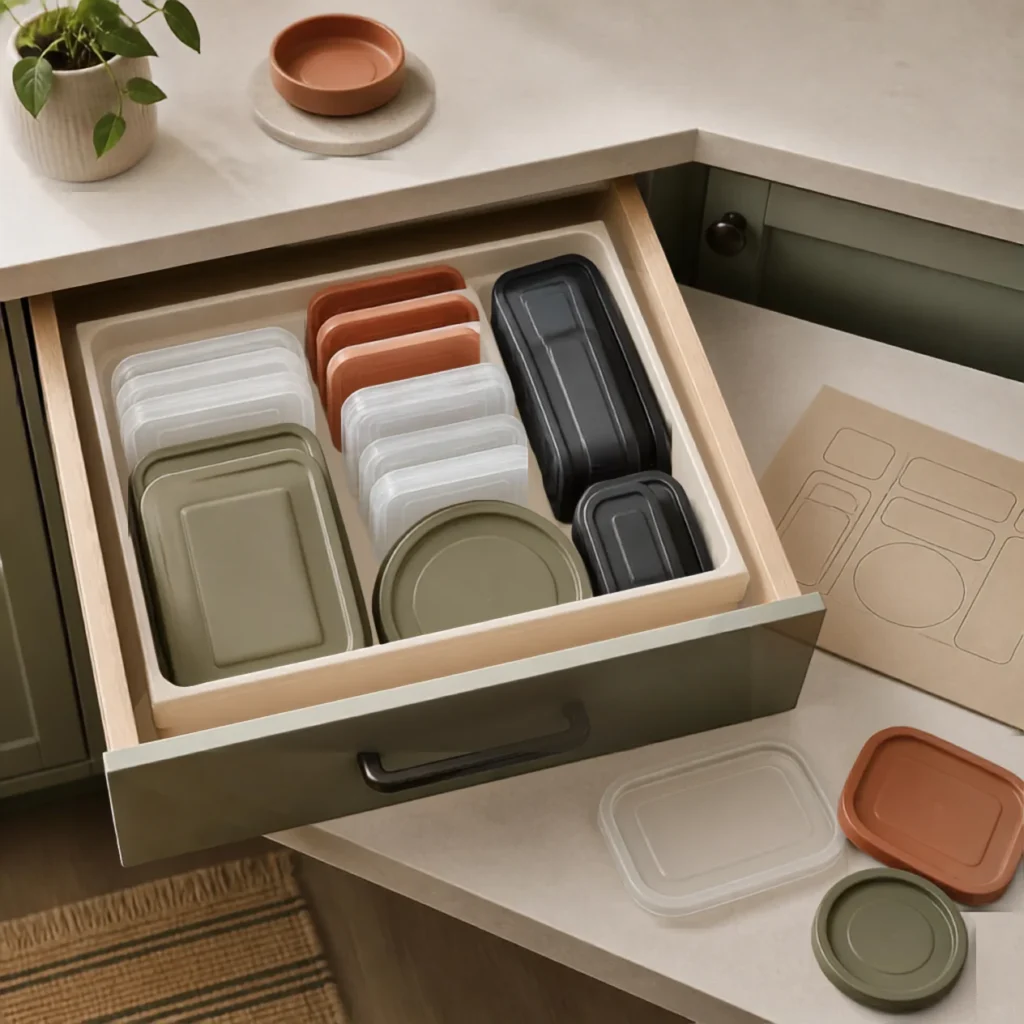
Use a suitable shallow tray you already own for a trial. A paper footprint can help compare a proposed organizer’s width and depth, but it cannot demonstrate loaded height or stability.
- Place all the lids normally stored here in their proposed groups.
- Check the tallest points against the available clearance before moving the drawer.
- Open and close it gently. Stop if anything touches, scrapes or resists.
- Take out a frequently used lid, then return it without rearranging the other groups.
- Repeat after the whole collection has been washed, dried and returned.
If stacks drift, a shallow tray or divider may help. If the drawer is crowded only when everything is home, reassign occasional pieces to a suitable nearby space. A taller organizer will not solve a shortage of closing height.
Buy for the Problem That Remains
For sliding flat stacks, compare low trays by their inside dimensions as well as their outside footprint. Thick walls and rounded corners can reduce the space available for a rectangular lid. For upright storage, check the base, divider spacing and loaded height together.
Choose something you can remove and clean according to its instructions. Do not assume every plastic organizer is dishwasher-safe. If your existing tray passes the fit and retrieval checks, keep using it; a matching set of organizers is optional.
Frequently Asked Questions
Should food container lids lie flat or stand upright?
Flat stacks suit drawers with limited vertical clearance. Upright storage can make individual lids easier to identify when the loaded rack fits. Try both with your actual lids before choosing.
Why does my drawer catch when the organizer itself fits?
The lids may rise above it, or a tab may contact the cabinet frame during movement. Remove the arrangement and check the loaded height and the drawer’s travel path. Do not force it closed.
Can I keep lids attached to their containers instead?
Yes, where the clean, dry sets fit and their care instructions allow it. This keeps pairs together but may use more space than nesting compatible bases and storing lids separately. Compare both arrangements with the full collection.
Make One Lid Easy to Find and Return
Start with matched lids, measure the drawer’s usable space and try a small number of separate stacks. Keep the arrangement that closes smoothly and lets you reach the lid you need. A drawer that works when every container is back from lunch is more useful than one that looks tidy only when it is half empty.