
Narrow Kitchen Drawer Organization: A Fit-First Utensil Plan
Narrow kitchen drawer organization works best when the drawer has one clear job. A slim drawer can be long enough for utensils and still jam because a ladle head rises too high, a can opener catches the frame or an organizer uses more depth than the drawer can spare.
Before buying a compact tray, measure the usable drawer box and the space above its contents. Then arrange the actual tools on a paper outline of that space. This quick test shows whether you need a stacked cutlery organizer, one long tray, several small modules or simply fewer items.

Give the Narrow Drawer One Job
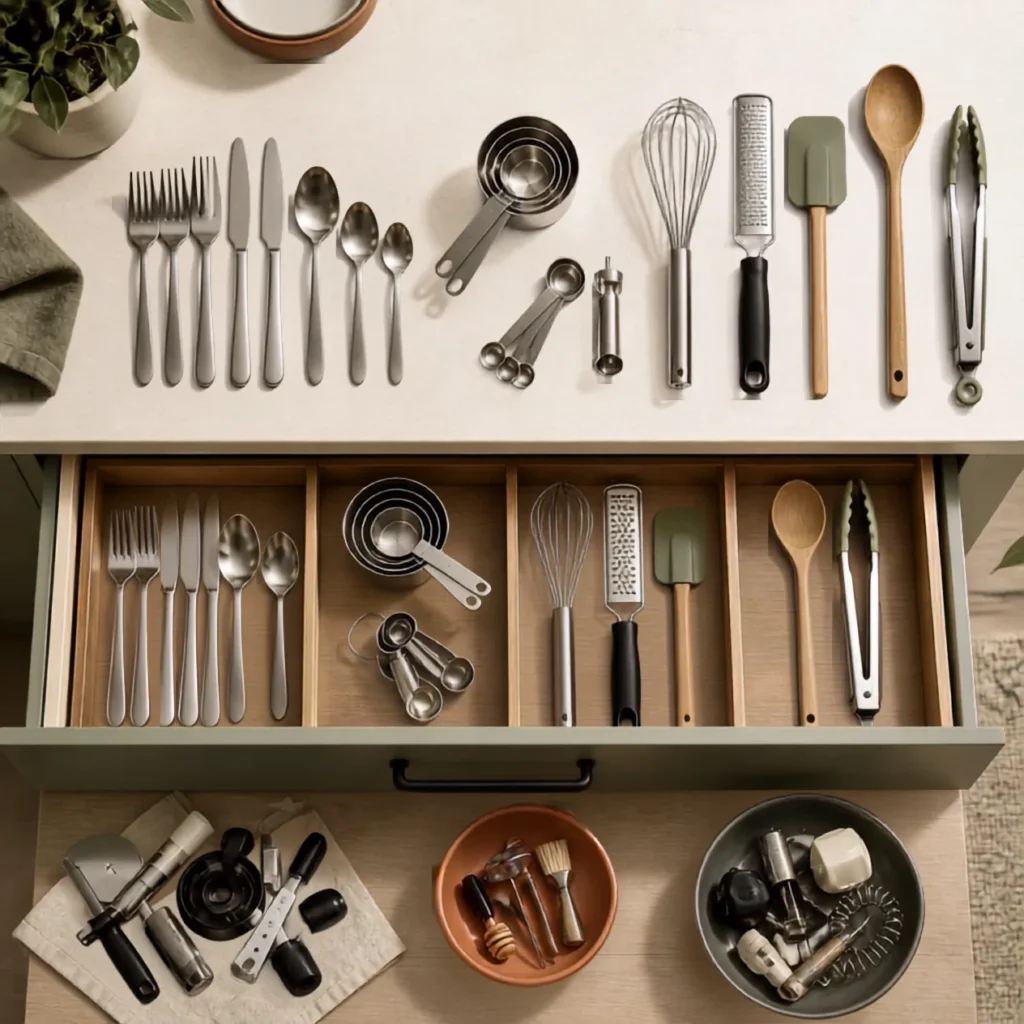
Empty the drawer completely and decide which task deserves the space. A narrow drawer can hold everyday flatware, measuring tools, small preparation tools or a restrained group of cooking utensils. It usually cannot handle all four groups without becoming a layered pile.
Bring together every item that belongs to the chosen task, including pieces in the dishwasher or another cabinet. Keep the tools you reach for regularly and remove duplicates, damaged pieces and specialty gadgets that do not earn this convenient position. Move occasional items to a suitable secondary zone.
Do not turn the leftover inches into a miniature junk drawer. Takeout packets, batteries, bag clips and appliance parts create a second job for the same space. If baking sheets or cutting boards are occupying the drawer, our guide to storing baking sheets and cutting boards explains how to move those flat items into a measured cabinet system.
Measure the Drawer Where the Organizer Will Sit
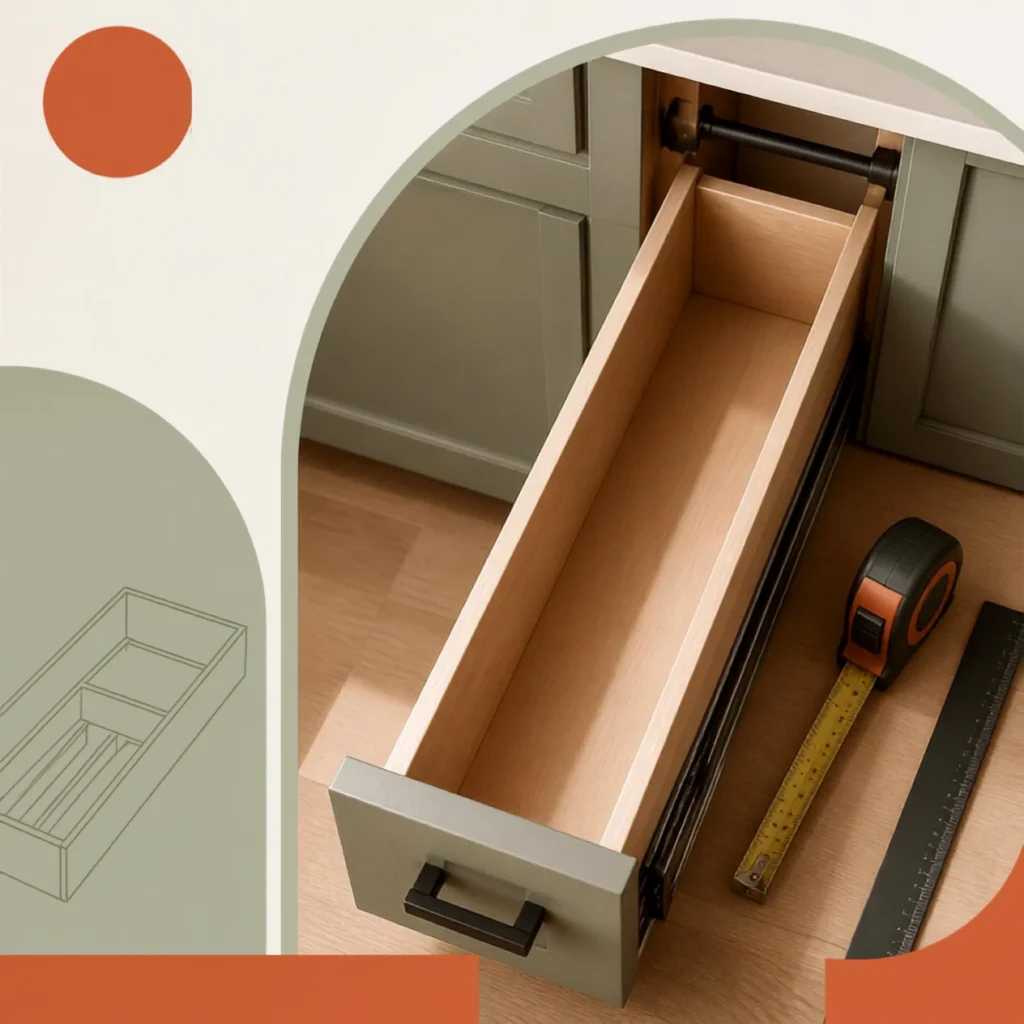
Ignore the outside face when sizing an organizer; the drawer box controls the fit. Measure inside that box at the front, middle and back. Old drawers can taper slightly, and hardware or screw heads may reduce the usable width in one area.
Record width and usable depth
Measure between the inner side walls, then measure from the inside front to the point where an organizer can sit without interfering with the back panel. Check how far the drawer actually opens. A long tray may technically fit but leave its rear compartment hidden beneath the countertop.
Find the loaded-height limit
Measure from the drawer floor to the lowest rail, cabinet frame or drawer above. This is the clearance for the organizer and its contents together. The height of an empty tray does not reveal whether stacked forks, a thick handle or a ring of measuring spoons will catch when the drawer closes.
- Interior width at the front, middle and back
- Usable depth with the drawer closed
- Floor-to-obstruction clearance
- Visible depth when the drawer is fully open
- Any hardware projecting into the storage area
Measure the Tools, Not Just the Tray
Lay the selected utensils on the counter and find the longest tool, widest head and tallest handle. Include hanging loops, locking tabs, hinges and spring-loaded parts. Tongs that open in the drawer or measuring spoons kept on a thick ring may need more room than their simple length suggests.
Sort the tools by shape before deciding on compartments:
- Long and narrow: chopsticks, straight spatulas and thermometers.
- Wide-headed: ladles, turners, scoops and serving spoons.
- Bulky mechanisms: can openers, peelers, corkscrews and kitchen shears.
- Small loose pieces: measuring spoons, clips and bottle openers.
These shapes need different amounts of lane width and height even when they support the same cooking task. A compartment plan based only on the number of utensils will miss the parts most likely to catch.
Test Narrow Kitchen Drawer Organization on Paper
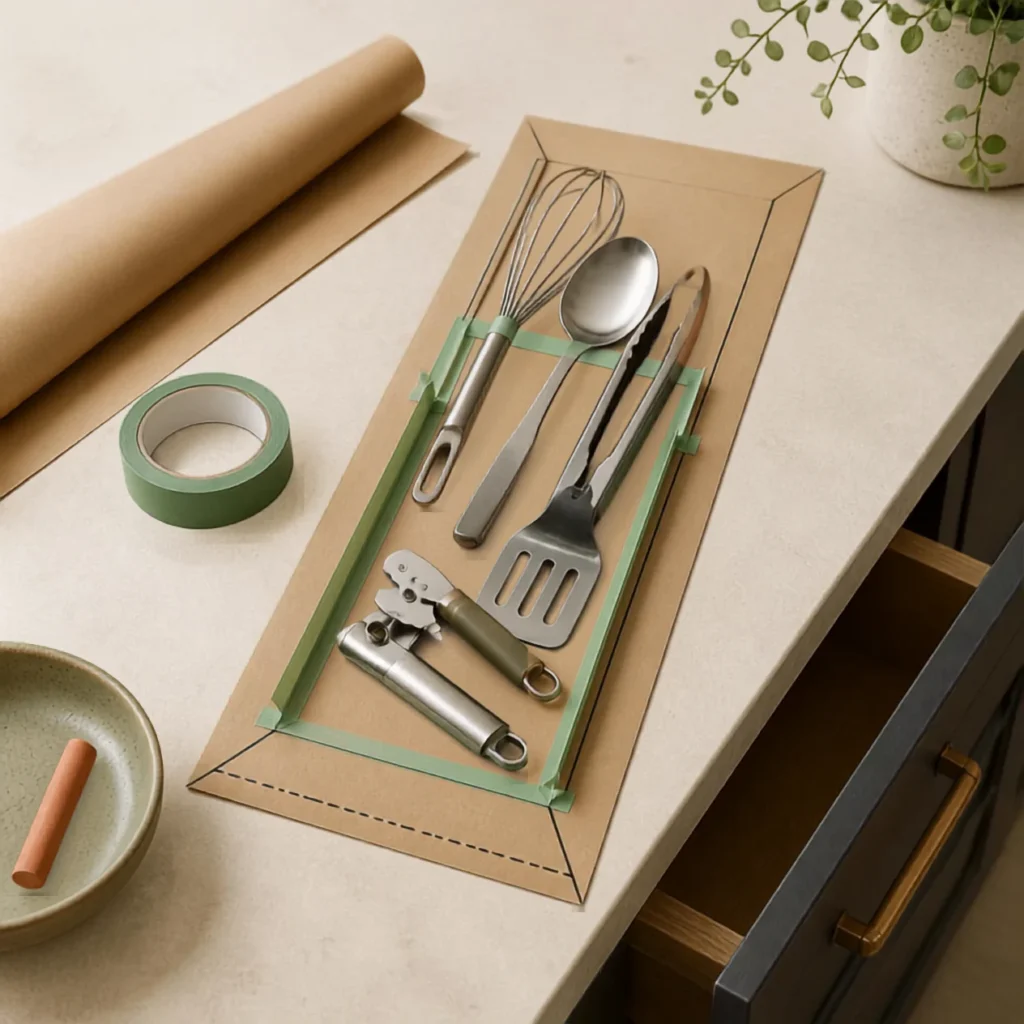
Mark the drawer’s usable width and depth on kraft paper, cardboard or a clear section of countertop using removable painter’s tape. Add a line for any area that stays hidden when the drawer is open. Place the real utensils inside this outline.
Start with the most-used tools near the front. Try alternating a broad utensil head with a narrow handle when that reduces wasted space, but keep every item easy to identify and return. Give small loose pieces a proposed cup or module rather than allowing them to spread below longer tools.
Next, mark the footprint of any organizer you are considering. Product dimensions should fit completely within the outline, with enough tolerance to lift the tray for cleaning. Remove and replace the most-used tool several times. If the paper plan works only when the layout is arranged perfectly, reduce the collection before purchasing anything.
Choose a Layout That Matches the Drawer
No single organizer type wins in every narrow drawer. Compare the storage method with the drawer’s width, depth and loaded-height limit.
| Layout | Useful when | Main fit check |
|---|---|---|
| Compact stacked cutlery tray | Flatware needs less width and the drawer has extra height | Manufacturer’s minimum drawer height when loaded |
| Long slim utensil tray | The drawer is deep and holds long cooking tools | Usable depth and access to the rear compartment |
| Separate narrow modules | The drawer is short or has an irregular interior | Combined footprint and gaps between modules |
| Adjustable divider lanes | You want to use the drawer itself as the tray | Divider tension, surface compatibility and tool-head width |
| Small set without a tray | Only a few visible tools remain | Non-slip surface, easy cleaning and no loose sharp tools |
Compact products illustrate why every dimension matters. Joseph Joseph lists its grey DrawerStore Compact Cutlery Organizer at 4 1/4 inches wide, 15 1/2 inches deep and 2 1/4 inches high, while specifying a minimum drawer height of 3 1/4 inches. The extra clearance matters after cutlery is added.
A slim tray can create the opposite problem. IKEA lists its white UPPDATERA utensil tray at 5 3/4 inches wide and 19 1/2 inches deep. That narrow width may suit one drawer while the depth makes it unsuitable for another. These examples explain the fit questions; they are not claims that either organizer was tested here.
Arrange Long Utensils by Shape
Place broad heads where they do not overlap into a tall mound. A ladle and a wide turner may fit better in opposite directions, while several straight tools can share a narrow lane. Keep the handles of frequently used pieces where they are easy to grasp without moving another tool first.
Close locking tongs before storage if their instructions permit it. Remove measuring spoons from a bulky ring when the set is designed to separate and doing so makes each spoon easier to reach. Do not stack mechanisms so that one tool’s hinge catches another.
Knives and other sharp tools need suitable dedicated storage such as a compatible in-drawer holder, sheath or knife block. Do not mix loose blades into an everyday utensil lane. Check the holder’s loaded height and follow its manufacturer’s use instructions.
Run a Loaded Drawer Test
Place the proposed tray or temporary modules in the drawer and load them with the real utensils. Close the drawer slowly the first time. Stop if anything touches the frame instead of pushing through the resistance.
Reopen the drawer normally and look for tools that moved beneath the cabinet rail. Remove and return the item used most often. The organizer should remain in position, neighboring tools should stay visible and the drawer should not require shaking or lifting at the front.
Repeat the test after several normal cooking sessions. A layout that works only for a staged photograph is too demanding to maintain. The better arrangement makes the correct return location obvious even when dinner cleanup is hurried.
Check These Details Before Buying
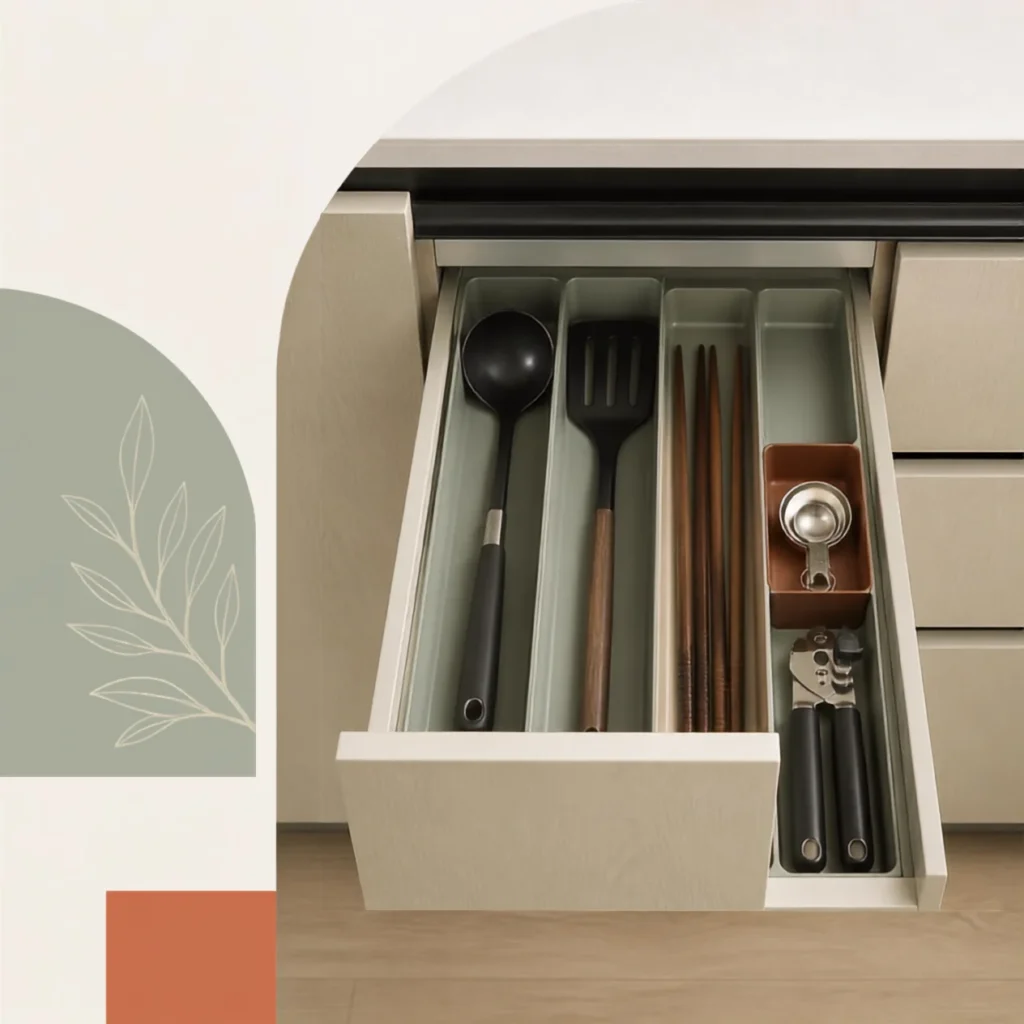
For reliable narrow kitchen drawer organization, compare the product specifications with both the empty drawer and the loaded paper plan. Check:
- complete outside width, depth and height;
- the manufacturer’s minimum drawer height;
- inside compartment length and width;
- the height of your stacked flatware or thickest utensil;
- non-slip feet, required mounting or adjustable tension;
- cleaning and care instructions; and
- the current return policy if the loaded test fails.
An expanding tray can fit the advertised width range and still fail because it is too deep or leaves a thin gap that traps small items. A modular system can fit the footprint but waste space through thick walls. Choose the simplest option that solves the specific problem shown by your paper test.
Frequently Asked Questions
What can I store in a very narrow kitchen drawer?
Choose one compact category: everyday flatware, measuring tools, small preparation tools or a few frequently used cooking utensils. The right category is the one whose necessary pieces fit without a second layer hiding them.
How wide should a slim utensil organizer be?
There is no universal width. Measure the drawer at several points and compare the organizer’s complete outside width with the narrowest usable measurement. Leave enough tolerance to remove the organizer for cleaning.
Why does my drawer jam after the organizer is loaded?
The utensils may rise above the empty tray and contact a rail or frame. A wide ladle head, stacked handles or an open pair of tongs can also shift into the closing path. Measure the loaded height and identify the exact contact point before replacing the tray.
Are stacked cutlery trays good for shallow drawers?
They save width but need more vertical clearance than a single-layer tray. Use the manufacturer’s minimum drawer-height specification and test the tray with your own cutlery. Do not judge fit from the empty product height alone.
Can I organize a narrow drawer without buying a tray?
Yes. A small, edited tool set may work on a washable non-slip liner, or suitable adjustable dividers may create simple lanes. Keep every piece visible, use dedicated storage for sharp tools and confirm that nothing can enter the drawer’s closing path.
Assign One Job, Then Test the Loaded Drawer
Good narrow kitchen drawer organization begins with fewer decisions, not more compartments. Give the drawer one job, measure its usable box and loaded clearance, and arrange the real tools on paper. Buy an organizer only when that test shows the exact width, depth and height the drawer needs.
If the rest of the kitchen still lacks clear storage zones, continue with our small kitchen storage plan for renters.