
Bathroom Organization
No-Drill Shower Storage Ideas for Renters: What Works in Your Shower
Shower storage without drilling starts with the surface, setup, load and removal method your rental shower can actually support.

Shower storage without drilling sounds simple until you compare the walls, fixtures and bottle load inside a real rental shower. A caddy that works perfectly on smooth glazed tile may be a poor choice for textured walls, while a tension pole that avoids wall contact still needs the right height and a stable corner.
The most reliable approach is to choose the mounting method before choosing the organizer. Start with your shower surface, look at the mounting points your shower gives you, count what actually needs to stay inside the wet zone, and decide how much wall contact you are comfortable with.
This guide compares adhesive, suction, tension, hanging and freestanding options so you can choose a method that fits your shower rather than forcing your shower to fit a product.
Shower Storage Without Drilling Starts With Your Shower Surface
The wall or enclosure surface is the first filter. If a mounting system is not designed for your surface, its size, style and capacity do not matter. Check the manufacturer’s approved-surface instructions before installation.
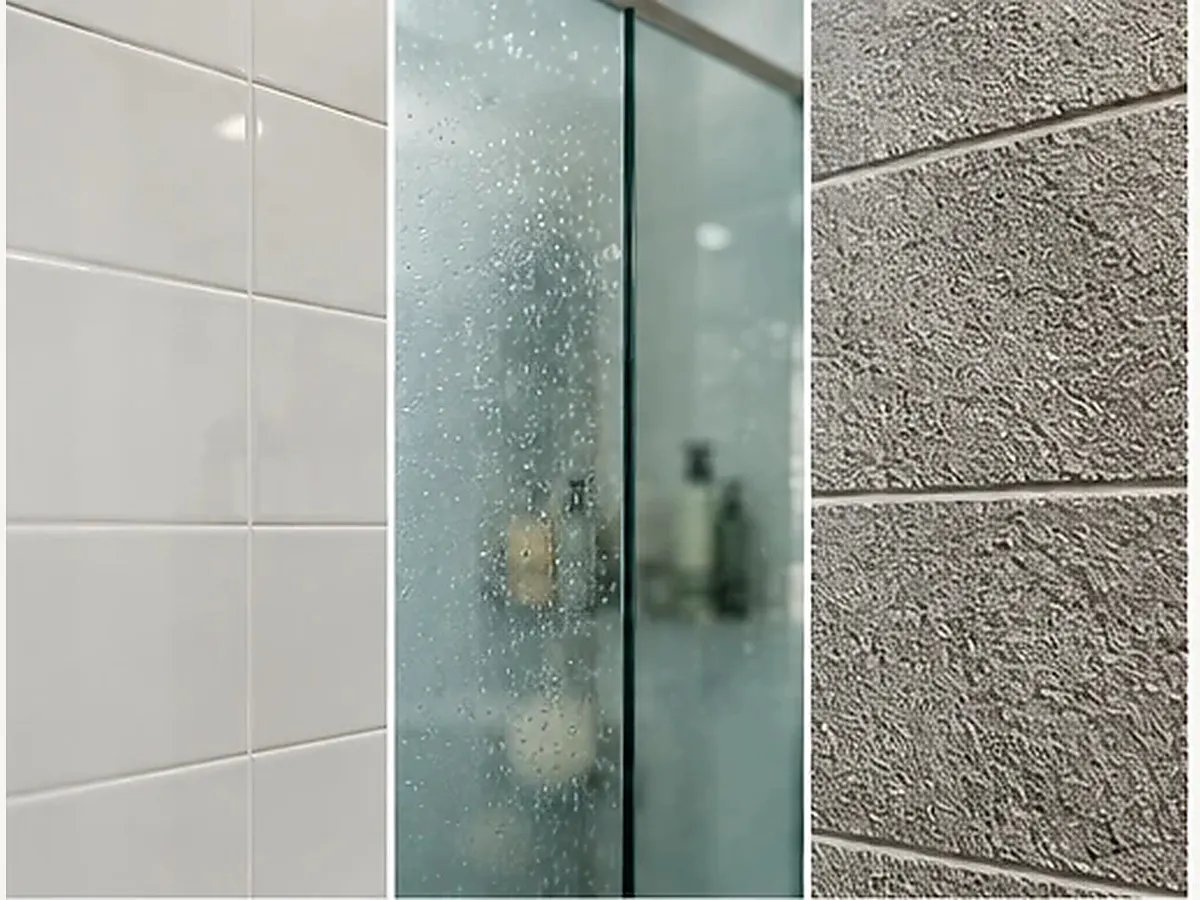
Smooth glazed tile
Smooth glazed tile gives you the widest range of no-drill possibilities. Bathroom-rated adhesive systems and some suction products may work here when the product specifically approves that surface. Clean and prepare the area exactly as directed before mounting anything.
Glass
Glass is smooth and nonporous, so it can be suitable for suction or certain approved adhesive systems. Check the placement carefully because mounting hardware and adhesive tabs may be more visually noticeable on a transparent enclosure.
Fiberglass or acrylic
Some bathroom-rated adhesive products are designed for fiberglass or similar smooth shower surfaces, but compatibility is product-specific. Do not assume a strip that works on tile is automatically suitable for every acrylic or fiberglass surround.
Textured or rough tile
Texture makes it harder for suction cups to form a consistent seal and may fall outside the approved surface list for adhesive systems. In this situation, tension, hanging or freestanding storage is usually a better method to investigate first.
Grout lines and uneven joints
A shelf should not depend on an uneven transition between tile and grout unless the manufacturer explicitly allows it. Position mounting points on the surface specified by the product instructions rather than trying to bridge gaps or rough joints.
Quick Guide: Which No-Drill Method Fits Your Shower?
Use this as a starting point, not a substitute for product instructions. Shower geometry and manufacturer requirements still decide whether a particular organizer is suitable.
| Your shower setup | Method to investigate first |
|---|---|
| Smooth compatible tile | Bathroom-rated adhesive |
| Smooth glass + lighter items | Suction |
| Textured or rough wall | Tension or hanging |
| Standard shower arm | Over-showerhead hanging caddy |
| No suitable wall surface | Tension pole |
| Tiny shower with little floor space | Compatible wall-mounted method |
| Shared shower with many bottles | Higher-capacity tension system |
| Zero wall contact wanted | Hanging or freestanding |
| Sloped ceiling | Avoid ceiling-dependent tension systems unless approved |
Use the Surface → Setup → Load → Removal Method
Good shower storage without drilling comes from matching four constraints before you shop. This framework keeps the decision practical even when two products look almost identical online.
Surface: what are you attaching to?
Identify smooth tile, glass, acrylic, fiberglass, textured tile or another surface. Then rule out any mounting method that the manufacturer does not approve for that material or finish.
Setup: what mounting points does the shower give you?
Look for a standard shower arm, a 90-degree corner, a flat wall, a stable ceiling contact point, a glass enclosure or a handheld shower rail. Your shower may naturally favor one method before product capacity even enters the decision.
Load: how much are you actually storing?
Count the bottles that genuinely need to stay in the shower. Three standard bottles create a very different load from two people’s pump bottles, razors, cleansers and accessories. Use the product’s published capacity instead of guessing.
Removal: how much contact are you comfortable with?
Some renters want zero contact with the wall and prefer hanging or tension systems. Others are comfortable with a removable bathroom-rated adhesive system on an approved surface. Your lease, surface condition and removal preference all matter.
Option 1: Adhesive Shower Storage
Adhesive shelves are attractive in small showers because they use wall space instead of floor space. They can also feel more stable than a loose hanging caddy when the product, surface and installation are a good match.
When adhesive storage makes sense
Investigate adhesive storage when you have a smooth manufacturer-approved surface, limited floor area and a clear wall position that keeps bottles easy to reach. It is especially useful when you want storage to stay fixed rather than swing or move during use.
Check the approved surface before anything else
The word adhesive does not mean universal compatibility. Tile texture, coatings, paint, grout and other finishes can change whether a product is appropriate. Follow the instructions for the exact mounting system instead of relying on a generic “renter-friendly” label.
Follow the product-specific wait or cure time
Do not assume every adhesive caddy uses the same 24-hour or 48-hour rule. Preparation and loading times vary. Install the mounting strips or plates exactly as directed, then wait the stated period before adding bottles.
Do not overload the shelf
Capacity is specific to the product and installation. Large pump bottles create more load than travel-size containers, and a shelf that physically fits six bottles may not be rated for their combined weight. Stay within the manufacturer’s published limit.
If adhesive is the right method for your shower, continue with our best adhesive shower caddy comparison for material, corrosion resistance, drainage and mounting details.
Option 2: Suction Shower Storage
Suction can be appealing for renters because it avoids traditional adhesive and can often be repositioned. The tradeoff is that suction depends heavily on the quality of the seal between the cup and the surface.
Best use case: smooth, nonporous surfaces
Suction is most promising on clean, smooth glass or similarly flat nonporous surfaces. If the wall has texture, raised patterns or uneven grout transitions, the cup may not create the seal the product needs.
Why suction caddies sometimes fall
A poor seal can come from surface texture, residue, incorrect installation, too much load or a cup that is not designed for that material. If a shelf repeatedly loses suction, replacing it in the same spot without addressing the cause will not solve the problem.
Use suction for a realistic load
For lighter shower storage without drilling, suction may be a practical choice when the product and surface are compatible. Keep the bottle count within the organizer’s stated capacity and check the seal as part of normal cleaning.
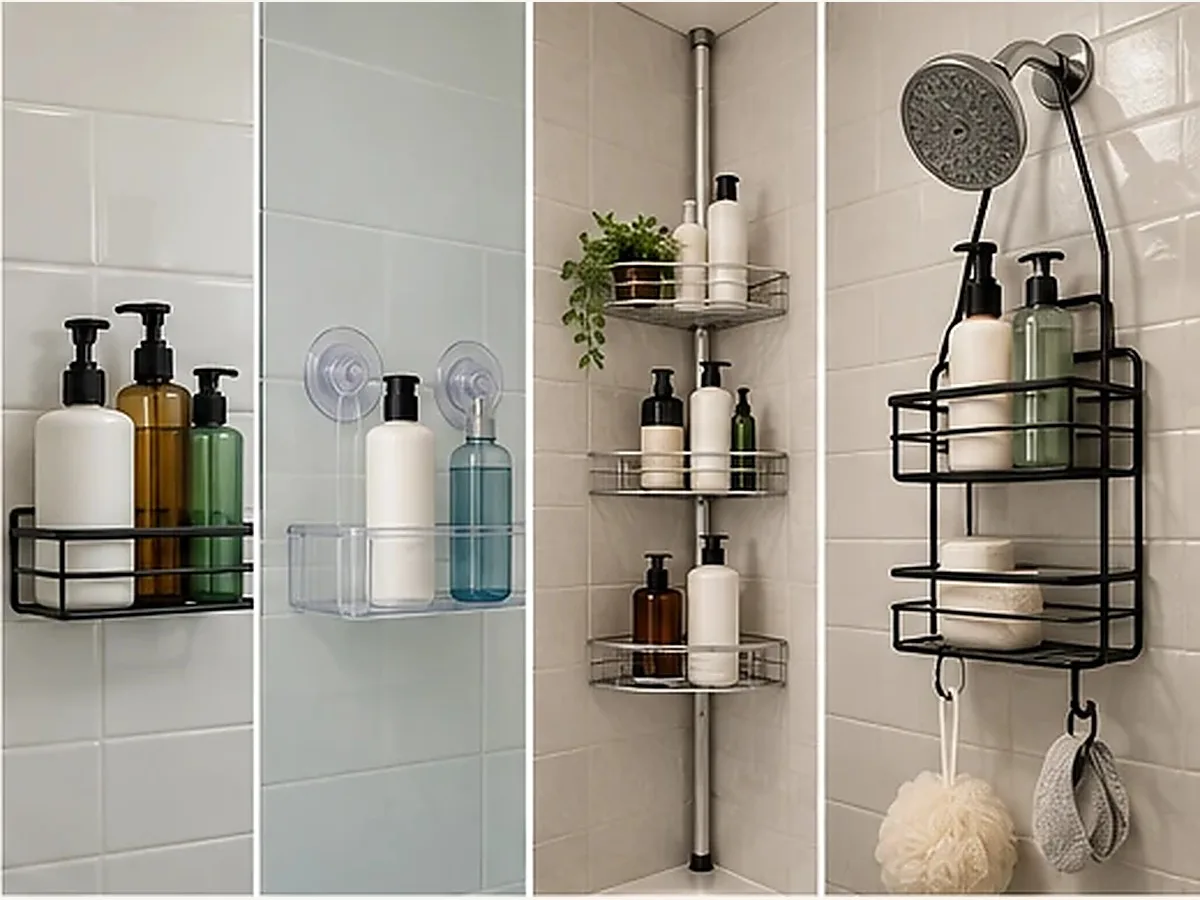
Option 3: Tension-Pole Shower Storage
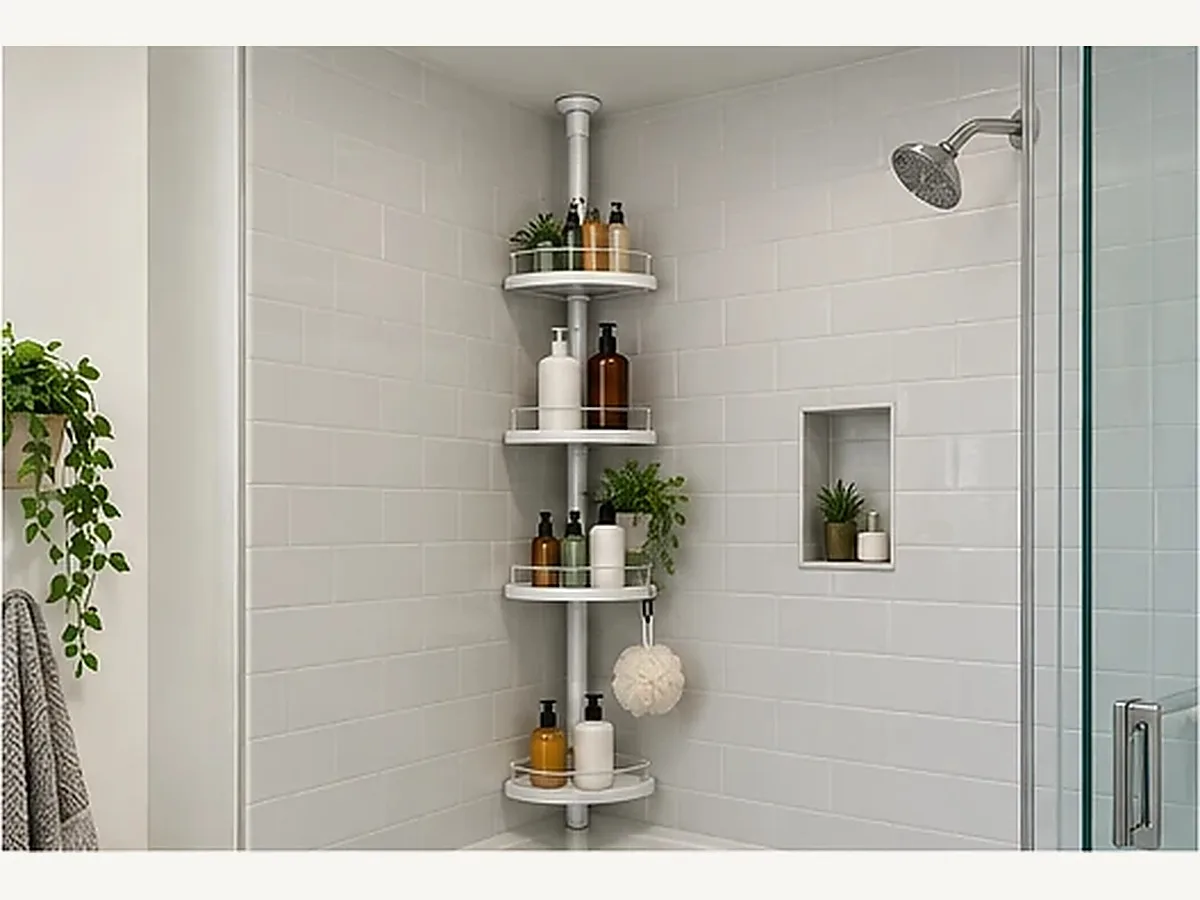
Tension poles solve a different problem: they create vertical storage without relying on the wall surface for adhesion. That makes them especially useful when tile is textured, a renter wants zero adhesive contact, or a shared shower needs more capacity than a small shelf can provide.
When tension storage is especially useful
Consider a tension system when you have a usable shower corner, stable upper and lower contact points, and enough height for the product’s adjustment range. Multiple baskets can separate products by person or routine without covering the shower floor.
Measure the installation height
Measure the actual distance between the lower contact surface and the ceiling. Do not rely on a general room height. A tub ledge, shower curb or raised base can change the required pole length.
Check the ceiling and corner geometry
A tension system needs the contact geometry specified by the manufacturer. A sharply sloped ceiling, unusual corner or unstable lower surface may make a particular pole unsuitable even when its advertised height range looks correct.
Keep the pole properly tensioned
Follow the assembly and tension instructions rather than overtightening. Recheck stability from time to time, especially after moving shelves or changing the bottle load.
Option 4: Over-Showerhead Hanging Caddy
A hanging caddy is one of the simplest renter-friendly approaches because it uses an existing fixture instead of the shower wall. It can be installed and removed quickly without adhesive or drilling.
Why renters like hanging caddies
There is no cure time, no wall preparation and no need to find a smooth mounting surface. For a standard showerhead setup, this can be the lowest-effort option.
Check shower-arm compatibility
Rain showerheads, short arms, handheld hoses and unusual fixtures can interfere with the caddy. Check the hanger opening, overall drop and distance from the spray before buying.
Prevent sliding and spray interference
A good hanging caddy should stay stable and should not block the showerhead, controls or hose movement. If the design includes stabilizing grips or suction points, use them only on approved surfaces and according to the product instructions.
Option 5: Freestanding Shower Storage
Freestanding storage is useful when you want no wall contact and the shower has enough floor area to spare. It can also be moved out for cleaning without removing adhesive or releasing suction cups.
When freestanding storage makes sense
A compact corner tower, narrow shower rack or small shower stool with storage can work in a larger stall where it does not interfere with entry, drainage or movement. It is less attractive in a genuinely tiny shower because every inch of floor space matters.
The main tradeoff is floor space
Do not add a floor organizer simply because it is renter-friendly. If it forces you to step around bottles or narrows the shower path, a compatible wall, hanging or tension method may use the space more efficiently.
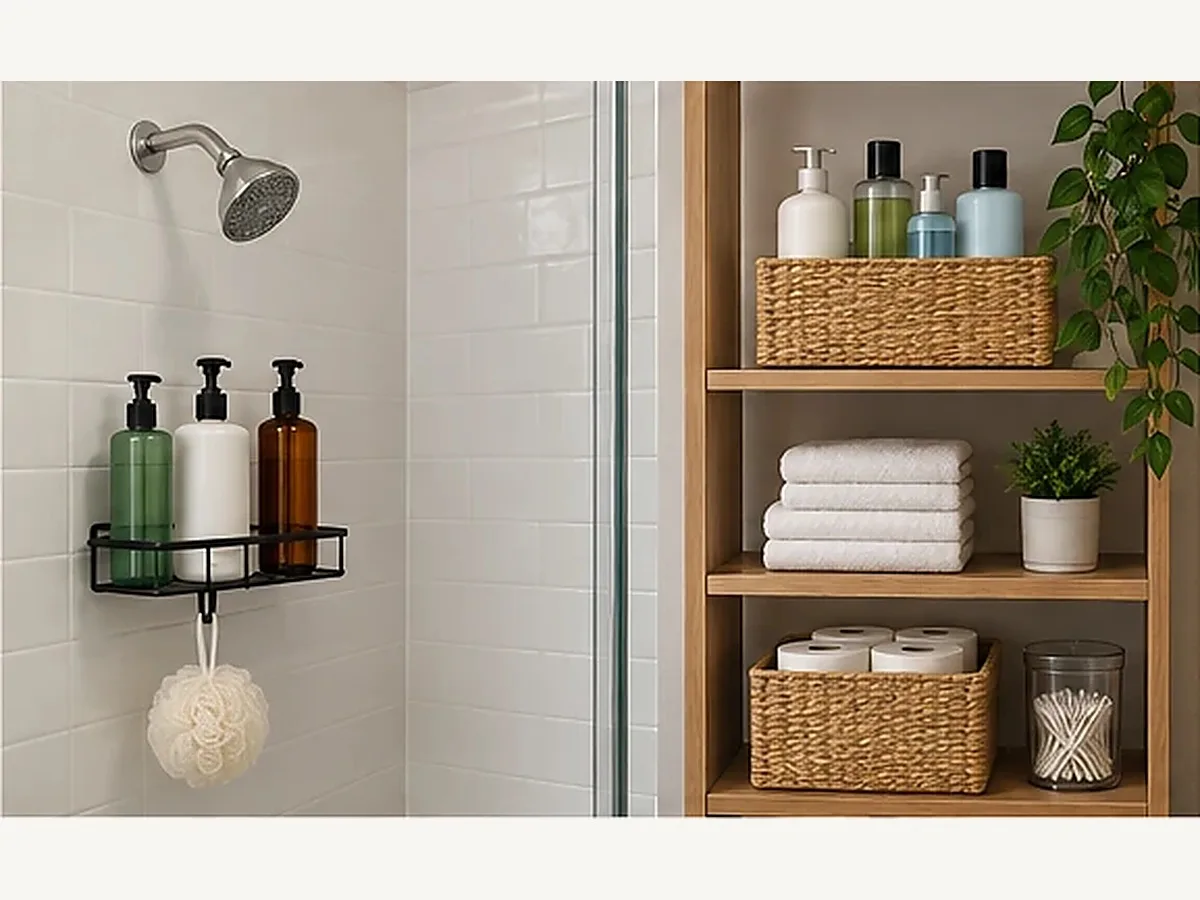
How Much Should Actually Stay in the Shower?
Sometimes the fastest way to improve shower storage without drilling is to reduce the number of products competing for wet-zone space. The shower should hold the products you use there regularly, not every bathroom backup you own.
Daily shower products
Keep the current shampoo, conditioner, body wash and other products you use during most showers. These deserve the easiest-to-reach shelf positions.
Occasional products
Clarifying treatments, special cleansers and products used only once or twice a week can move to a nearby bathroom cabinet if the shower is crowded. Bring them in when needed.
Backup bottles
Store refills and duplicate bottles outside the wet zone. If your bathroom has almost no built-in storage, our guide on how to organize a small bathroom with no storage shows how to create a backup zone elsewhere.
Drainage Matters as Much as Capacity
A shower organizer lives in a wet environment, so capacity is only half of the design problem. Water needs a path out of the shelf, basket or tray so products are not sitting in a puddle after every shower.
Look for open wire, perforated bases, slats or drainage gaps that let water escape and make the organizer easier to rinse and wipe down. A shelf that holds more bottles but traps water may create more cleaning work than a smaller, more open design.
For shower storage without drilling, drainage also matters because water should not remain trapped around mounting hardware or behind bottles where you cannot see it easily.
What About Rust and Corrosion?
Repeated moisture exposure means material and finish quality matter. Look for products intended for shower use and follow their care instructions, especially around joints, fasteners and coated surfaces.
For a deeper comparison of adhesive shower-caddy materials, corrosion resistance and mounting reliability, see our best adhesive shower caddy guide. This page stays focused on choosing the right no-drill mounting method first.
Common No-Drill Shower Storage Mistakes
Most failed shower-storage setups can be traced back to choosing the organizer before checking the shower. Avoid these common mistakes:
- Buying a caddy before checking surface compatibility.
- Mounting a system partly over an unsuitable or uneven surface.
- Ignoring the organizer's published weight capacity.
- Loading adhesive storage before the manufacturer's stated wait or cure time.
- Keeping backup bottles in the shower instead of reducing the load.
- Buying a tension pole before measuring the actual installation height.
- Using a hanging caddy that interferes with the showerhead, hose or spray.
- Choosing storage with poor drainage just because it has more shelf space.
- Assuming the phrase “renter-friendly” guarantees zero risk on every surface.
A 5-Minute Shower Storage Check Before You Buy
Before ordering anything, run through this short decision process. It takes less time than returning a caddy that cannot mount safely or fit your shower.
- Check the surface. Smooth tile, glass, textured tile and acrylic do not support the same mounting options.
- Identify the setup. Note the shower arm, corners, ceiling, enclosure and any handheld fixtures.
- Count the daily bottles. Remove backups and occasional products before estimating capacity.
- Measure the mounting area. Check width, height and clearances for the method you are considering.
- Read the manufacturer instructions. Confirm surface, installation, capacity and removal requirements.
- Choose the organizer. Only after the method passes the first five checks.
The final question is simple: does this method fit my surface, shower geometry, product load and removal preference? If one answer is no, choose another mounting method instead of trying to force the product to work.
Frequently Asked Questions
How can I add shower storage without drilling?
You can consider bathroom-rated adhesive, suction, tension-pole, over-showerhead hanging and freestanding storage. The best choice depends on the wall surface, shower geometry, bottle load and how much wall contact you are comfortable with.
What works on textured shower walls?
Textured walls may not provide the smooth contact required by many suction or adhesive systems. A tension pole, hanging caddy or freestanding organizer is often a better method to investigate first, subject to the product instructions and your shower setup.
Are adhesive shower caddies renter-friendly?
They can be suitable for renters when the manufacturer approves the surface and the product is installed and removed exactly as directed. There is no universal guarantee that every adhesive system is appropriate for every rental surface.
Is suction or adhesive better for a shower caddy?
Neither is universally better. Suction can be useful on a smooth nonporous surface with a lighter load, while a bathroom-rated adhesive system may provide a more fixed installation on an approved surface. Compare the requirements of the actual products you are considering.
Do tension shower caddies damage ceilings?
Compatibility depends on the specific tension system, ceiling material and installation method. Follow the manufacturer's instructions and adjustment range rather than overtightening or assuming every ceiling is suitable.
What is the best shower storage option for a small rental bathroom?
The best shower storage without drilling is the option that is compatible with your shower surface and setup while using no more floor space than necessary. For smooth compatible walls, that might be adhesive or suction; for textured walls, tension or hanging storage may be more practical.
Choose the Method First, Then the Organizer
Reliable shower storage without drilling starts before you compare shelf sizes or product reviews. First identify the surface. Then check the shower setup, decide how much product weight you need to support, and choose how you want the system to be removed later.
Use the sequence Surface → Setup → Load → Removal. It helps you rule out unsuitable products quickly and keeps the shower from becoming crowded with storage that was never a good fit.
The best no-drill shower organizer is not the one with the most shelves. It is the one your shower can support reliably without creating a new space problem.
For storage outside the shower, continue with our small bathroom storage ideas for renters guide.