
Hair Tool Storage Ideas for Small Bathrooms: A Safer, Clutter-Free System
Hair tool storage ideas for small bathrooms need to account for more than the dimensions of a holder. A hair dryer has a bulky handle and cord; curling irons and straighteners can remain hot after use; and a holder that crowds the sink or stops a drawer from closing creates a different problem. The best starting point is an appropriate cooling location, followed by permanent storage that fits the complete appliance and daily routine. This guide explains our Two-State Storage System and Tool, Cord and Clearance method. For a room-wide plan, see small bathroom storage ideas for renters.
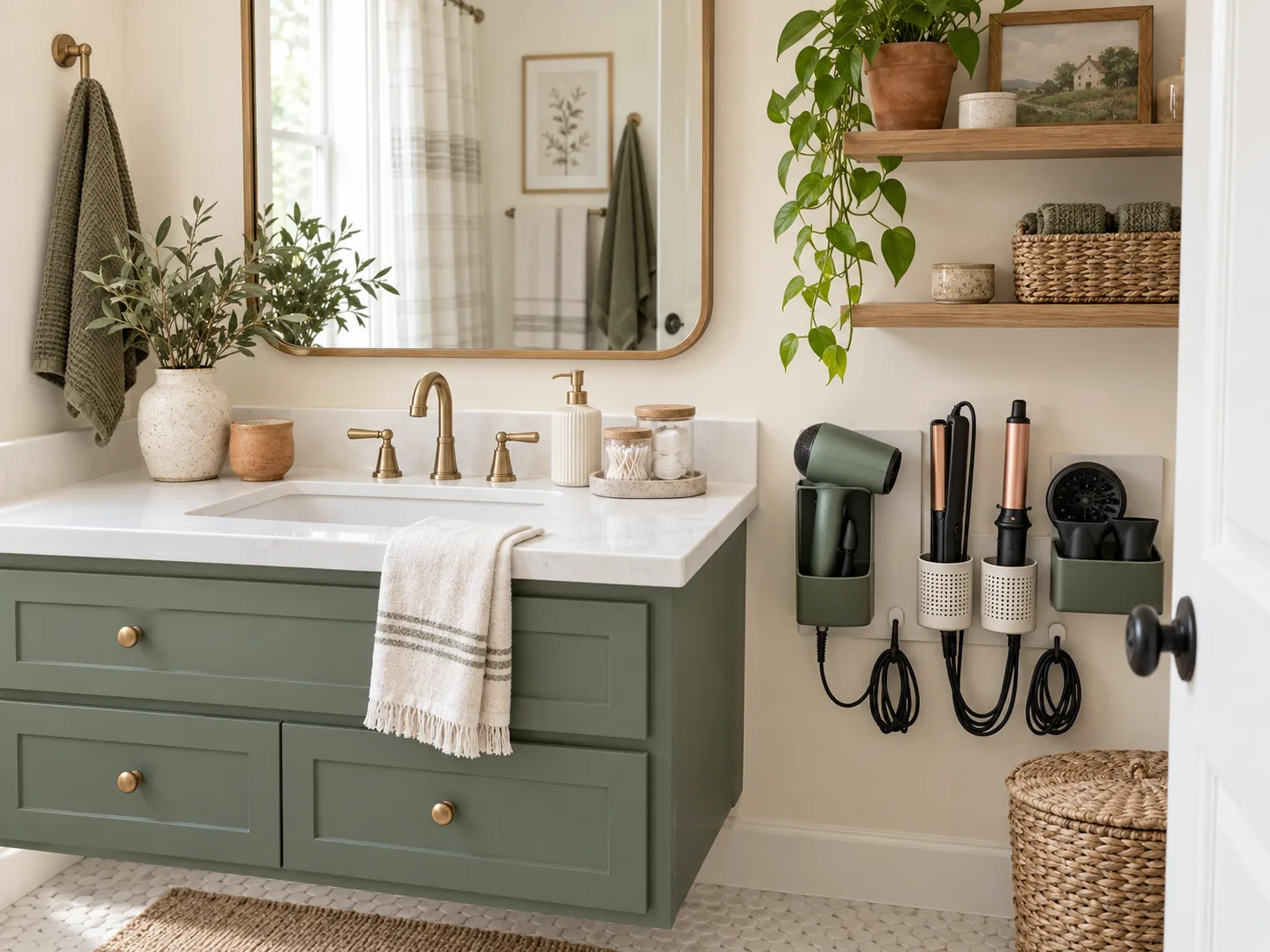
Start With the Two-State Storage System
Every appliance needs two distinct arrangements after use: somewhere appropriate to cool and somewhere suitable to stay. One holder does not automatically satisfy both.
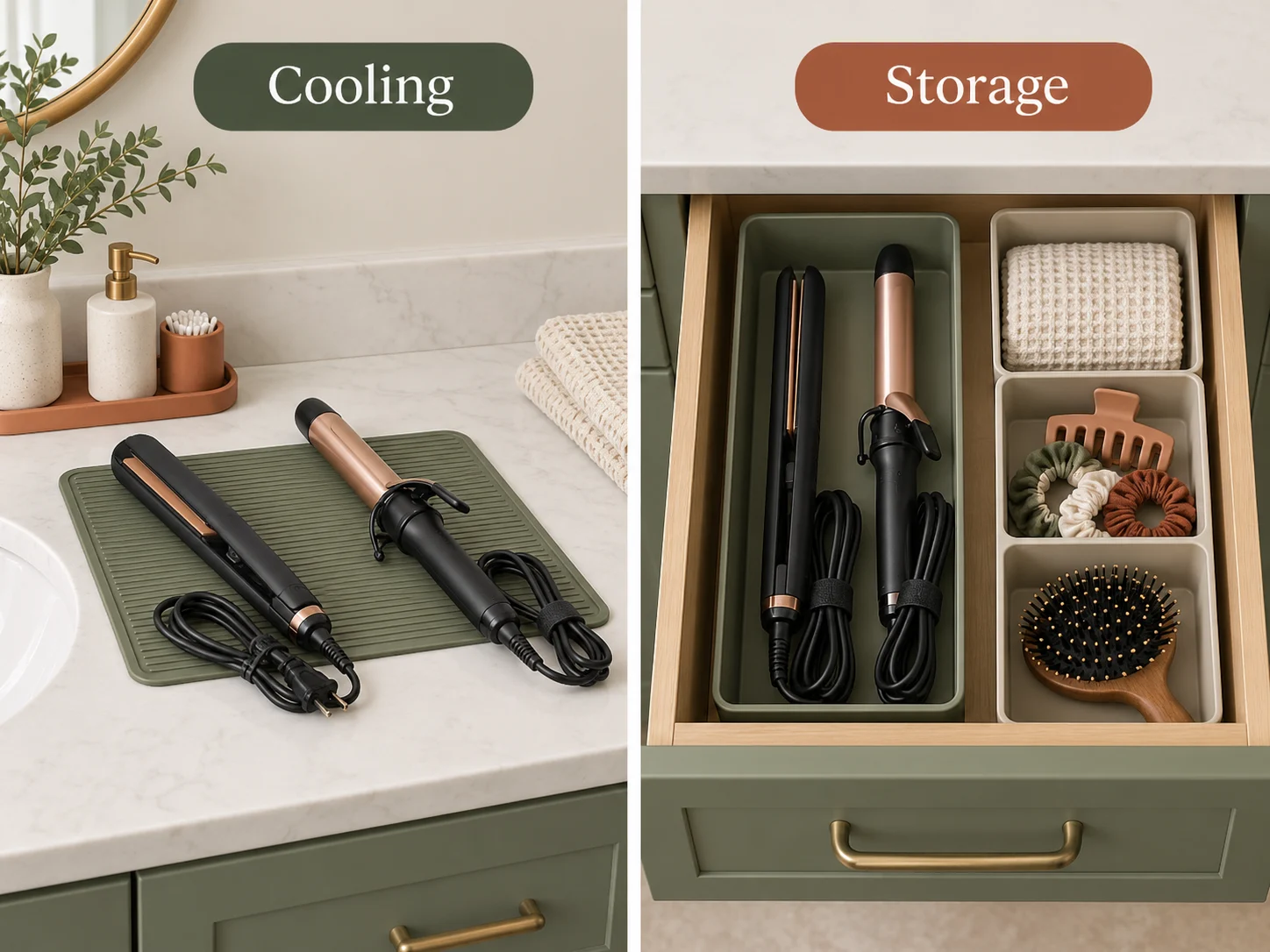
State 1: choose a suitable cooling location
Unplug the tool after use. Follow its manual and allow heated appliances to cool on an appropriate heat-resistant surface away from water, children and unsuitable materials. Do not improvise with an ordinary plastic tray, towel or enclosed cabinet. If your vanity has no suitable cooling space, reconsider where you perform the styling routine.
State 2: give the cooled tool a permanent home
After cooling as directed, store the unplugged appliance in a dry holder, drawer, cabinet or portable caddy that accommodates the whole tool, attachments and cord. A convenient power outlet beside a holder does not make leaving an appliance plugged in appropriate.
Read both product instructions
Some holders advertise heat resistance. That does not mean any hot appliance can be inserted immediately. A metal cup is not proof of heat compatibility. Check the instructions for the appliance and holder rather than relying on a product image or general claim.
Audit Your Actual Hair Tools Before Buying Storage
Lay out all hair appliances and accessories in a dry location. Count the complete set before selecting a holder, because attachments are often what create overflow.
Dryer and attachments
Include the dryer body, handle, nozzle and diffuser. A diffuser can be much wider than the dryer and may require its own dry compartment. Do not plan for the dryer alone and leave attachments balancing on the cabinet shelf.
Straighteners and curling tools
Measure the full length from handle to tip, not only the heated plates or barrel. Long curling wands may fit better horizontally than in a narrow cup. Follow their manufacturer-specific storage requirements.
Daily versus occasional items
Frequently used appliances need accessible permanent locations. A tool used occasionally can live in a suitable dry location outside the compact bathroom. Do not buy a multi-tool station just because it looks organized in a picture.
Measure Tool, Cord and Clearance
Write down real appliance dimensions and compare them with usable organizer dimensions. A paper footprint test can reveal whether a wall or vanity has sufficient space without committing to a purchase.
Fit test: Before ordering, place the measuring tape where the holder would sit and mark the depth of the actual appliance. Include clearance for gripping the handle and removing the tool without lifting everything beside it. If you plan to use a divided compartment, measure each usable opening, not just the organizer’s outside width. A holder that looks roomy but has a narrow mouth may not accept your diffuser or dryer body. If product specifications omit the relevant opening dimensions, seek the manufacturer’s measurements rather than guessing from pictures.
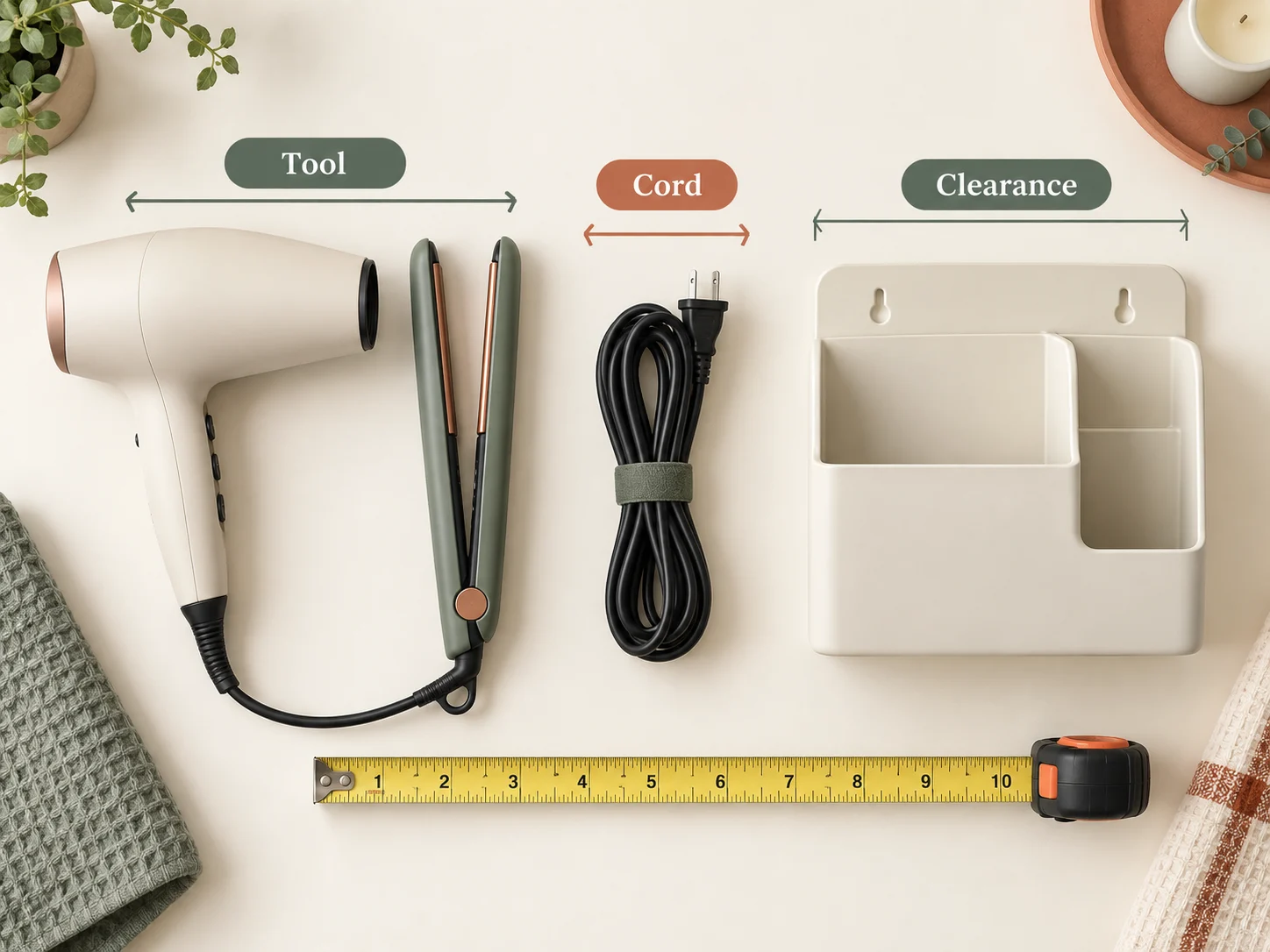
Tool: measure the whole appliance
Record maximum length, width and depth, including the handle, body, nozzle and attached components. Account for separate attachments too. Check the orientation permitted by the appliance and holder instructions.
Cord: leave enough room
Allow space for an unplugged cord to rest without sharp bends, tight wrapping or being crushed. A storage arrangement is too small if its cable has to be forced under a lid or drawer edge.
Clearance: check movement
Measure usable interior width, depth and closing height for drawers. Cabinet-door layouts need hinge, shelf and plumbing checks. For wall holders, check how far the handle and cord project into the room and whether a nearby door or person could catch them.
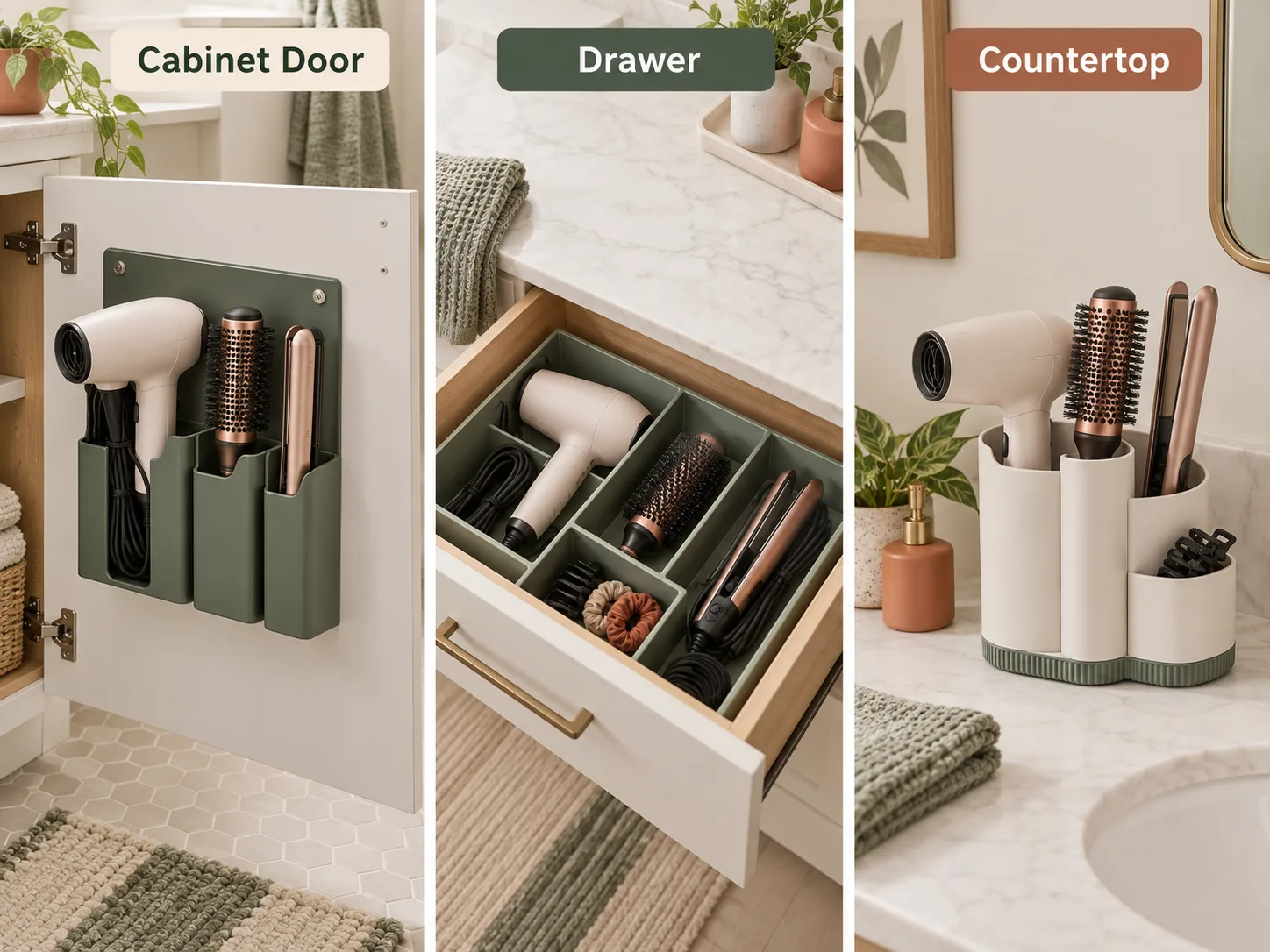
Option 1: Inside-Cabinet-Door Holders
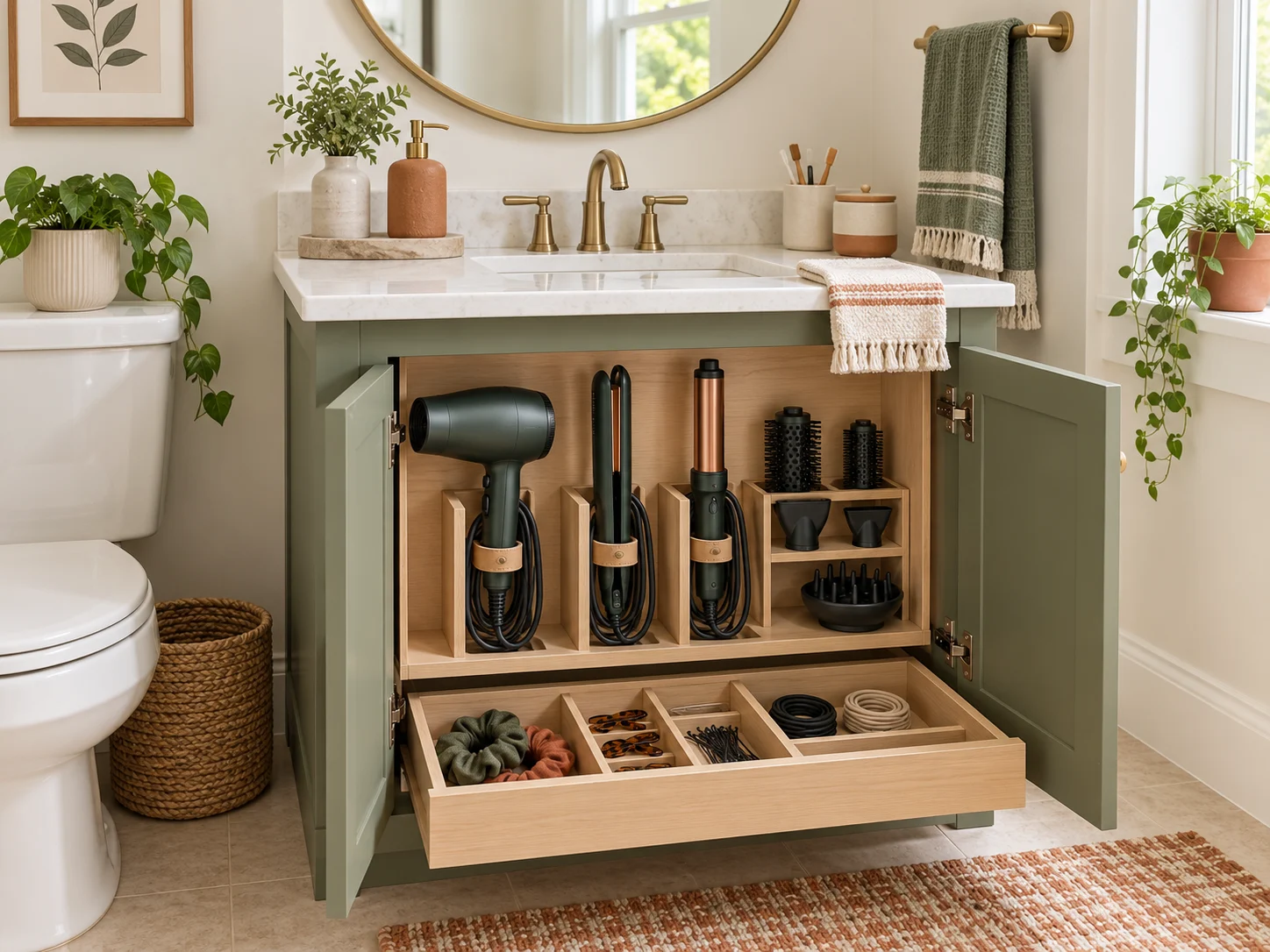
Among hair tool storage ideas for small bathrooms, inside-cabinet-door holders can reclaim a crowded vanity surface. However, the entire mounted organizer moves inside the cabinet whenever the door closes. A holder that fits the panel may still interfere with pipes or shelves.
Practical example: Imagine a compact cabinet where the drain occupies the center and the door swings inward past a shelf. The free space on the door may appear broad when open, but the dryer handle can strike the shelf once closed. Map the entire door movement with a ruler or a cardboard outline of the tool. Keep the plumbing service area accessible. If this cabinet cannot pass the test, a drawer or separate storage location is more sensible than rearranging plumbing around an accessory.
Check the closing path
Measure the gap between the closed door and existing plumbing, shelving and bins. Put the full tool and cord into the fit calculation. Keep drain connections and shutoff valves accessible.
Confirm the attachment method
Some holders require screws; others use approved hanging or removable systems. Check door thickness, weight limits, installation instructions and rental permission. No-drill does not guarantee damage-free removal or universal suitability.
Plan the cabinet as a whole
If the space below the sink is already congested, consult our under-sink bathroom organization guide before adding another storage attachment.
Option 2: Store Fully Cooled Tools in a Drawer
A suitably sized vanity drawer may be a useful permanent home for an unplugged, completely cooled appliance. However, an ordinary drawer is not a cooling chamber.
A useful drawer trial: Lay the cooled, unplugged tool into the drawer in the position you expect to use every day, then place its cord and attachments beside it. Open and close the drawer normally, without pushing on the front. Next, retrieve the appliance in one motion and return it. If you must remove several unrelated toiletries first, the setup is too crowded even if the drawer technically closes. Reserving one uncomplicated tool zone usually improves daily access more than a large assortment of small trays.
Closing height matters
Check whether the complete handle, nozzle or barrel clears the drawer opening. Test the drawer with its normal contents and make sure it closes freely without pushing on the appliance.
Keep cords away from sliders
Arrange the cord in a defined space where it cannot catch on tracks or be pinched by the door edge. Never solve a fit problem by pushing the drawer harder.
Use a simple internal layout
A long compartment may be more functional than many small cells. See our bathroom drawer organization guide for the measurement-first approach to vanity drawers.
Option 3: Countertop Hair Tool Organizers
A countertop caddy offers easy access only when it occupies a suitable dry area and leaves the sink usable. The appliance must not be positioned where it could fall or be pulled into a sink or bathtub.
Protect the working surface
Measure the organizer footprint and look at the space remaining for washing hands, brushing teeth and temporary grooming items. A compact holder can still be the wrong choice for an extremely narrow vanity.
Move storage when the area is unsuitable
If it crowds the faucet, competes with daily routines or sits too close to water, investigate another storage location. Our small bathroom counter organization guide explains how to protect usable sink-side space.
Option 4: Wall-Mounted Holders
A wall-mounted hair tool organizer may free counter space where a suitable dry wall and permitted installation exist. It is not automatically the right option for a rental.
Confirm the load and surface
Check the product’s mounting instructions, supported weight and compatible surfaces. Do not assume adhesive designed for lightweight toiletries will support a heavy dryer. Follow the exact manufacturer requirements.
Measure the appliance projection
The full dryer handle or nozzle may extend farther than the mount itself. Confirm that it will not obstruct cabinet doors, the shower entrance, towel bars or the walking route. Keep the appliance and cord away from water.
Option 5: Over-Door or Portable Storage
A compatible door or storage outside the bathroom may offer a more practical alternative when the wall and vanity are already occupied.
Over-door fit
Measure door thickness, frame clearance and organizer projection. Test the complete door swing with the tool and unplugged cable in place. Check the holder’s stated load limit and approved installation.
Portable caddy
If you normally style your hair at an appropriate dry location elsewhere, store fully cooled tools and attachments near that routine in a stable caddy. Do not relocate appliances to an unsuitable electrical location merely to free bathroom space.
Compare Hair Tool Storage Ideas for Small Bathrooms
Use the complete setup, not the organizer label, to decide. A crowded counter and roomy cabinet suggest investigating inside-door storage. If a deep drawer has sufficient closing height, it may accept cooled tools. Wall holders require approved installation, while over-door systems need door clearance. Alternatively, a portable caddy may suit a routine elsewhere. If no safe, dry bathroom position meets the appliance instructions, permanent storage can be outside the bathroom. There is no universal organizer that fits all hair dryers and styling tools.
Buying decision: Check four questions in sequence. Does the tool fit completely? Can the cord rest without strain? Does the storage location remain suitable and accessible? Can the appliance be returned only after cooling as instructed? If any answer is no, eliminate that option before comparing finishes or price. This saves money on accessories that solve visual clutter but create awkward daily handling. Product specifications, mounting instructions and genuine cabinet measurements are more reliable than the apparent scale of an online lifestyle photograph.
Manage Cords Without Creating a New Problem
A holder that fits the dryer but crushes the cord does not truly fit. Treat cable space as part of the original measurement rather than an afterthought.
Unplug when not using the dryer
The U.S. Consumer Product Safety Commission advises unplugging hair dryers when not in use and avoiding positions where they could fall or be pulled into a sink or bathtub. A storage organizer does not replace electrical precautions.
Avoid tightly wrapping styling-tool cords
Electrical Safety First advises appropriate cooling for straighteners and curling tongs and warns against wrapping their cords around the tools. Follow each appliance manual and allow enough relaxed cord space.
Test door and drawer closure
Gently close and reopen the storage area with the disconnected cord in place. If it snags, pinches or presses against the door, rearrange or use another location.
Do not improvise electrical wiring
Do not create a homemade powered drawer, conceal an extension cord inside cabinetry or build a DIY cabinet outlet. This article addresses organization, not electrical installation; electrical alterations require qualified expertise and applicable safety requirements.
Renter-Friendly Does Not Automatically Mean Damage-Free
For renters, hair tool storage ideas for small bathrooms often start with existing cabinet and drawer space, over-door hardware or portable caddies. However, compatibility still matters. Confirm the permitted installation, the manufacturer’s load rating and any removal requirements. In particular, adhesive is not automatically suitable for every tile or painted wall, especially when supporting a heavy appliance. When suitable mounting is not possible, find a different storage arrangement rather than skipping the stated requirements.
Create a Shared Hair Tool Station
When two people share a vanity, designate one clear position for each cooled tool and another container for compatible attachments. Give the unplugged cords enough room and prevent one person’s tools from blocking another’s routine. Do not let permanent storage occupy the appropriate cooling location. If the household uses several heated appliances, the system should account for each appliance’s instructions without stacking hot tools together merely to make the station look tidy.
Common Hair Tool Storage Mistakes
Common mistakes include buying a holder before measuring a diffuser, ignoring cord space, blocking the cabinet door with a nozzle, forcing a drawer closed, selecting a location beside water, leaving the dryer plugged in, storing a hot iron in an ordinary plastic container, assuming metal automatically equals heat-safe, using unapproved adhesive mounts, and filling the entire vanity with a large multi-tool rack. Each problem starts when a decorative storage solution takes priority over actual dimensions and manufacturer requirements.
A Practical 10-Step Pre-Buy Checklist
1. Inventory tools and attachments. 2. Identify a suitable cooling location. 3. Read each appliance manual. 4. Measure the entire tool. 5. Allow comfortable cord space. 6. Measure the proposed organizer location. 7. Check water exposure and nearby materials. 8. Verify mounting, load and rental requirements. 9. Test door, drawer and access clearance. 10. Store appliances only when their instructions permit. Take the completed measurements to the product listing before choosing any organizer.
Frequently Asked Questions
These general answers supplement, rather than replace, appliance-specific instructions.
How do I store a hair dryer in a small bathroom?
Unplug it and use a suitable dry permanent location where the whole appliance, accessories and cord fit without obstructing plumbing or normal movement.
Can I store a hair dryer under the sink?
Possibly after cooling and unplugging, provided the location remains dry, meets the manual’s requirements and preserves plumbing access.
Where should I put a curling iron immediately after use?
Unplug it and allow it to cool in an appropriate location on a heat-resistant surface away from water and children, following the manufacturer instructions.
Can a hot straightener go in a drawer?
Do not assume an ordinary drawer is safe for a hot styling tool. Follow the appliance’s cooling directions before putting it away.
What organizer suits a tiny vanity?
It depends on the measured tool, cord and available storage. A compatible cabinet holder, adequately sized drawer or portable caddy may protect counter space.
How do I keep the dryer cord organized?
Leave the appliance unplugged and arrange the cable without tight wrapping, sharp bends or pinching, following its instructions.
Can renters use holders without drilling?
Some over-door, portable or manufacturer-approved removable holders may work. Verify surface, door and load compatibility along with rental restrictions.
Build a Storage System That Fits Your Routine
Effective hair tool storage ideas for small bathrooms account for the whole sequence: cool appropriately, unplug, confirm the appliance fits, then store. Use the Two-State Storage System before selecting a holder, and measure Tool, Cord and Clearance before buying. If an organizer strains a cable, crowds the sink or prevents access to plumbing, look for another solution. For the broader bathroom plan, explore our small bathroom storage ideas for renters.