
How to Organize a Small Kitchen With No Pantry: A Daily-Stock System
No pantry? Start with the food, not a shopping cart. You can organize a small kitchen with no pantry by giving frequently used food the easiest cabinet access, grouping the rest of your current groceries nearby, and keeping unopened duplicates in a separate suitable spot only if you have room. If the shelves are already full, adjust what you buy before adding another organizer.
This guide walks you through a Daily-Stock System, a clearly illustrated-in-words two-cabinet example, renter-friendly alternatives, and a grocery reset that keeps the arrangement working. No remodeling or matching-container collection required.
Start by Checking How Much Food You Actually Store
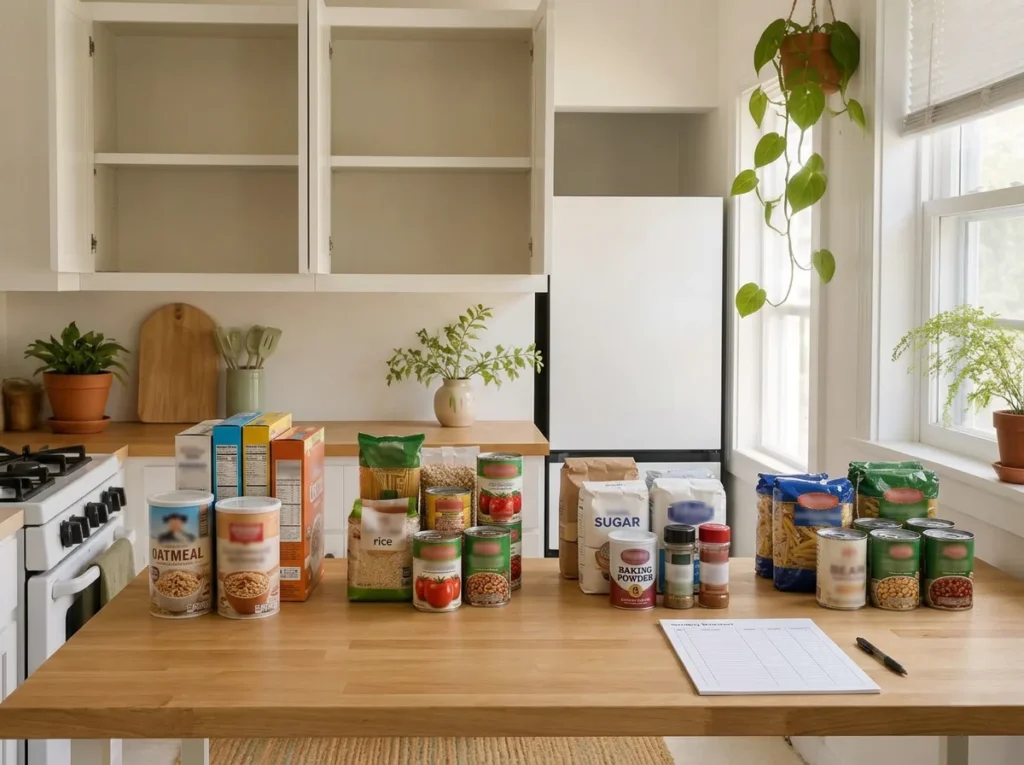
Before measuring shelves, collect shelf-stable groceries from every permitted storage spot. Include the cereal on the refrigerator, pasta beside the dishes, and unopened beans in the hallway cupboard. Keep refrigerated and frozen groceries in their required cold storage; this inventory exercise is for shelf-stable items only.
Sort your foods on a clean table into everyday ingredients, current cooking staples, occasional items, and unopened duplicates. Discard items that are spoiled or otherwise unsafe, checking package guidance rather than judging safety from a date alone. Do not open intact food just to decant it for a photograph.
A five-column inventory worksheet
| Food | How often used? | Opened? | Storage instructions | Proposed home |
|---|---|---|---|---|
| Oatmeal | Most mornings | Yes | Check label; protect from moisture | Daily-access shelf |
| Rice | Several dinners weekly | Yes | Check package | Working-food shelf |
| Extra unopened pasta | When current package runs out | No | Check package | Backup spot, if space allows |
For your own worksheet, note how many packages you have, not just their names. Three extra boxes may be the reason a shelf cannot accept the food you use daily. If you share the kitchen, ask other household members which foods they reach for before assigning homes.
Build the Daily-Stock System
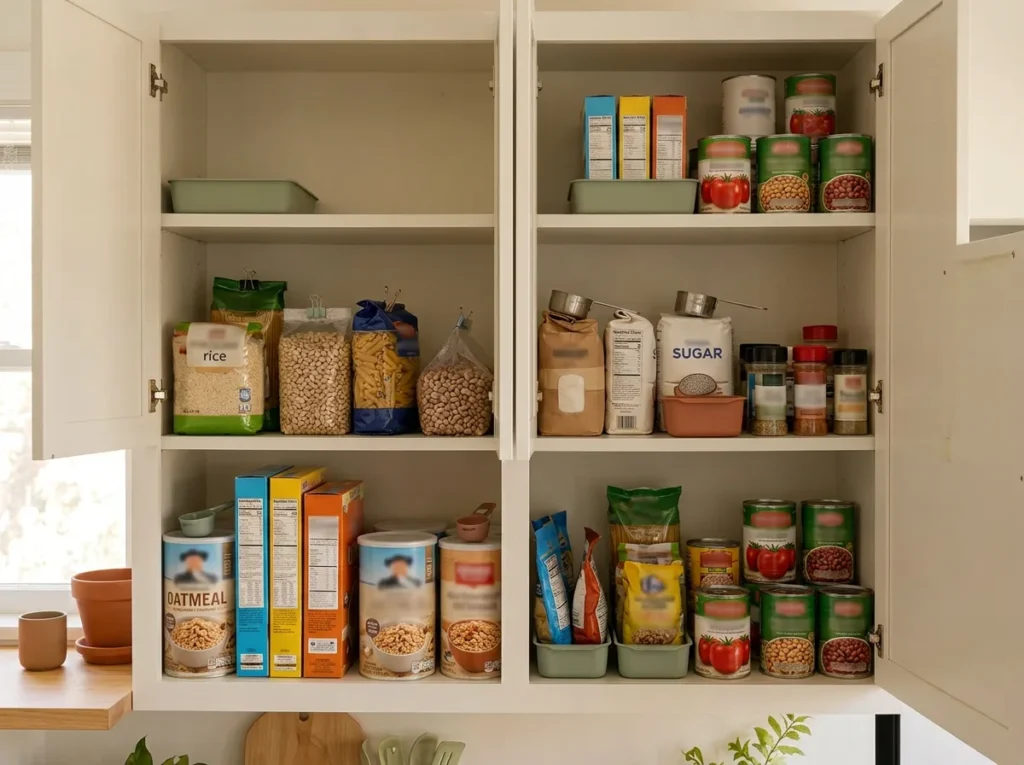
These three zones describe jobs, not necessarily three separate cabinets. A one-cabinet apartment can still use them by dividing a shelf into sections.
1. Daily-access food: easiest reach
Place breakfast supplies, frequently used snacks, and ingredients needed most days where you can retrieve them without moving other packages. Aim for visibility: the labels should face outward, and a short item should not disappear behind a tall box. A shallow bin can keep several little packets together, but it should slide out without hitting the cabinet door.
2. Working food: the groceries you are using
Group opened pasta, rice, beans, baking supplies and other regular cooking ingredients by task or category. If seasonings are taking over your easiest shelf space, use our small kitchen spice storage guide to separate heat-sensitive, daily-use, and backup spices without crowding this food zone. Give heavier items stable, appropriately rated lower shelving. Keep food in its suitable packaging or a clean food-safe container that closes properly, following any instructions requiring refrigeration after opening. The working zone can share a cabinet with daily-access foods; the distinction is how quickly you need each item.
3. Backup food: unopened duplicates
One extra package of a frequently used staple may be useful; several duplicates can crowd out dishes or prep equipment. Put backups together in an appropriate cool, clean, dry food-storage location, not beside household chemicals or in an unsuitable hot or damp area. If no such space exists, buy smaller quantities more frequently when your budget and shopping access permit. The aim is a stock level your home can safely hold, not a universal rule about how many cans to own.
The daily-stock test: Can you get breakfast or begin a typical dinner without unloading a shelf? Can you see the open package before reaching for its replacement? If either answer is no, rearrange before buying more bins.
Choose Where Your Food Will Live
Map the actual usable spaces before choosing organizers. If a cabinet is deep enough that food disappears behind the front row, our deep kitchen cabinet organization guide shows how to build pull-forward access before adding more containers. Measure the cabinet opening and interior width, depth and height. Note hinges, shelf pins and the space needed to lift or pull out an item. The outside width of a cabinet is not its usable storage width.
| Existing space | Good use | What to check |
|---|---|---|
| Eye-level cabinet shelf | Daily and frequently used lightweight foods | Reach, visible labels, door swing |
| Lower cabinet | Heavier shelf-stable packages | Shelf rating, bending and retrieval |
| Deep drawer | Short food packets or stable containers | Closing height, drawer load limit |
| Removable shelf riser | Short lightweight items in wasted vertical space | Interior height plus hand clearance |
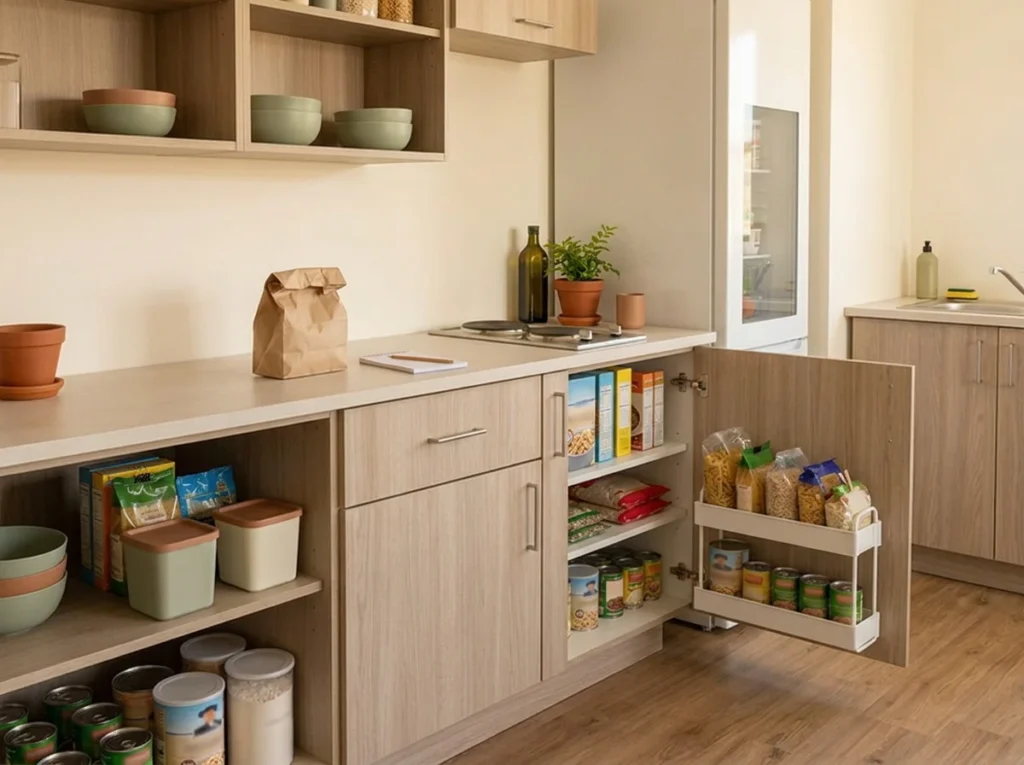
| Pull-out bin | Packets otherwise lost at the back | Full withdrawal, handles and hinges |
| Freestanding cart or shelving | Overflow where a genuine safe footprint exists | Walkway, stability, anchoring requirements |
Test a proposed organizer with a cardboard footprint before ordering. Put a box or sheet of paper the product’s stated width and depth where it would sit. Open doors, pull drawers, and reach past it. A product that physically fits yet blocks access is not a useful upgrade.

How to Organize a Small Kitchen With Only Two Cabinets
Here is an illustrative scenario, not a measured real-home test. A renter has two usable food cabinets, one narrow drawer, no pantry closet and one small counter needed for meal preparation. The groceries include oats, cereal, snacks, rice, pasta, canned tomatoes, beans, flour and unopened duplicates.
Before: why the arrangement fails
Both cabinets contain mixed groceries. Everyday oatmeal is behind extra pasta; cans sit above lightweight snack boxes; an open flour bag is squeezed beside cleaning supplies. More food is stacked on the counter. Retrieving dinner ingredients requires moving several items, and the owner cannot tell whether pasta needs replacing.
After: assign one clear role to each space
| Location | New contents | Retrieval rule |
|---|---|---|
| Cabinet A, easy-reach shelf | Oats, cereal and frequently used snacks | Keep fronts visible; avoid a second hidden row |
| Cabinet A, remaining suitable shelf | Current rice, pasta and frequently used seasonings | Group by meals; return each item to its home |
| Cabinet B, lower shelf | Current canned foods and other heavier items | Check shelf capacity; avoid unstable stacks |
| Cabinet B, upper suitable shelf | Occasional baking supplies and limited unopened duplicates | Keep contents accessible and away from unsuitable conditions |
| Narrow drawer | Small, light food packets only if drawer is suitable | Use a low divider that clears the drawer |
The flour moves away from chemicals and into an appropriate food area, with the package properly closed or placed in a suitable food-safe container. Any remaining duplicates that do not fit are a signal to use existing supplies and revise the next shopping list, not a reason to occupy the stove, floor or prep counter.
Notice what did not happen: no custom construction, no claim that every two-cabinet kitchen holds this inventory, and no promise that an organizer magically creates more volume. The example is a decision pattern you can adapt to your cabinet dimensions, household size and dietary needs.
Make Pantry Alternatives Work in a Rental
Removable bins and shelf risers
Use a bin when it prevents small packets from getting lost, not merely to hide a collection of boxes. Choose one shallow enough to retrieve comfortably. A shelf riser can divide a tall opening, but measure the height of packages beneath it and leave room to remove items on top. Follow manufacturer and cabinet load limits.
A rolling cart
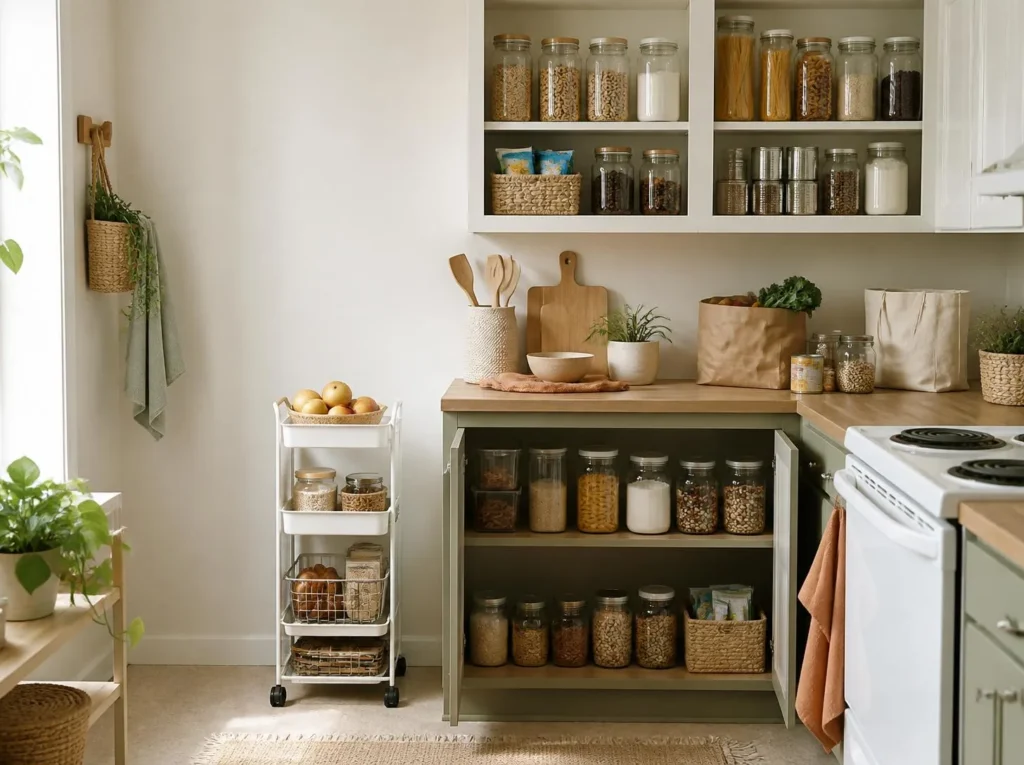
A slim cart can hold suitable shelf-stable groceries if you have a genuine gap. Measure the cart’s full footprint, including wheels and handles, then check the walkway with the cart in its normal loaded position. It must not obstruct an exit, appliance ventilation or the opening of an oven, refrigerator or dishwasher. Choose a stable cart, follow its load and assembly instructions, and do not assume it will be useful simply because it is labeled slim.
Freestanding shelving or a cabinet
Extra furniture is justified when existing storage cannot reasonably serve the household. Compare the furniture’s full depth with the room, check whether the manufacturer requires wall anchoring and confirm what your lease permits. Freestanding does not always mean safe without an anchor. Avoid placing heavy food high up or installing shelves over a cooking surface.
For a broader plan covering counter space, cabinet doors and no-drill storage, see our small kitchen storage ideas for renters guide. This article stays focused on where groceries should live.
Store Dry Food Safely Without a Pantry
A pantry is a storage location, not a food-safety exemption. If you are considering the cabinet above the refrigerator for occasional storage, first review our above fridge cabinet organization guide; heat, appliance clearance and reach can make that location unsuitable for everyday food. The USDA describes shelf-stable products as foods that can be kept at room temperature until their packaging says otherwise, and recommends a cool, clean, dry place for dry goods. Some canned products must remain refrigerated, so check the actual label rather than assuming every can is shelf stable. USDA shelf-stable food guidance.
Keep groceries away from leaks, extreme heat, dampness and household cleaning chemicals. The FDA specifically advises keeping nonperishable food away from poisons and household chemicals. If a cabinet is under a sink, avoid using it for food if it shares space with cleaning chemicals or has a moisture or leak risk. FDA food-storage guidance.
For opened dry goods, close packaging as directed; where extra protection makes sense, choose a clean food-safe container. Preserve ingredient, allergen, preparation and storage instructions and any useful date or batch information, either by keeping the package or recording the information accurately. Decanting every product is optional, not a prerequisite for organization.
Put milk, meat, eggs, foods labeled keep refrigerated and other perishables in the refrigerator promptly. FDA guidance says foods requiring refrigeration should not remain at room temperature longer than two hours, or one hour when temperatures exceed 90°F. Keep the refrigerator at 40°F or below. These foods do not belong in a new room-temperature pantry zone simply because the fridge is crowded. FDA refrigeration guidance.
Inspect cans for bulging, leakage, punctures, severe rust or damaging dents rather than relying on an attractive label. A best-if-used-by date generally concerns quality, not a universal safety deadline; infant formula has a distinct date requirement. Follow product-specific directions and use judgment about damage, spoilage and storage history. USDA food-date guidance.
Reset Your Food Storage After Grocery Shopping
Start with items that need refrigeration or freezing: put those away immediately. Then bring shelf-stable groceries to the food-storage area. Check what is already open and what needs to be used, then put the new unopened equivalent behind or beside it without creating an unstable stack. Read package instructions before choosing a location.
- Put refrigerated and frozen groceries away first.
- Check current opened packages and existing duplicates.
- Group new dry goods beside the same category.
- Return everyday items to their easy-reach places.
- Place only the backups that safely fit into the backup space.
- Update the next shopping list if duplicates are accumulating.
This reset should fit into your normal unpacking routine. It does not require elaborate labels or a rigid schedule. If a popular ingredient constantly overflows, you may need a slightly larger suitable space; if rarely used extras overflow, change how much you buy.
What to Buy and What to Skip
Buy an organizer only after naming the retrieval problem it will solve and checking dimensions. A removable shallow bin is useful when snack packets disappear behind one another. A riser can help with a tall cabinet holding lightweight short packages. A cart is worthwhile only if existing storage is insufficient and a safe footprint exists.
| Problem | Consider | Skip when |
|---|---|---|
| Packets get lost in a deep shelf | Shallow pull-out bin | It cannot clear the opening or holds too little |
| Unused height above short packages | Stable removable riser | Access or load limits become a problem |
| Food spills from torn original bags | Appropriate food-safe container | Packaging already works and space is tight |
| Cabinets are genuinely insufficient | Suitable compact storage furniture | It blocks circulation or requires prohibited anchoring |
Avoid buying a matched container set before measuring its combined footprint. Rectangular containers may stack neatly in one kitchen yet waste space in another; oversized jars can also make it harder to read original product information. There is no tested product ranking in this guide, and any later affiliate recommendations should be based on verified specifications and clearly disclosed relationships.
Common No-Pantry Organization Mistakes
Buying storage before reducing duplicate inventory
Extra capacity can simply fill with more extras. Audit what’s already there and consider a smaller recurring shopping quantity when practical.
Moving food to unsuitable spaces
The area next to a hot appliance, under a leaking pipe or near cleaners is not a pantry substitute. Check conditions before treating any empty space as food storage.
Hiding the opened package
If you cannot see the current rice or cereal, you may open a duplicate too soon. Keep in-use food identifiable and accessible.
Filling every inch of a shelf
Leaving enough room to grasp a package makes a cabinet work. Maximum density is not the same as functional storage.
Giving the counter to groceries
A clear food-preparation surface is valuable. If groceries routinely remain on the counter, revisit cabinet allocation and purchase quantities rather than assuming another countertop basket is needed.
Frequently Asked Questions
Where do I put food if my apartment has no pantry and almost no cabinets?
Keep frequently used shelf-stable food in the most suitable accessible cabinet or drawer, then consider a compact freestanding unit only if you have a safe location and its installation requirements suit your rental. Reduce excess duplicates where feasible and protect the food-preparation surface.
Can a rolling cart replace a pantry?
It can hold some shelf-stable items if its capacity, stability, placement and surrounding temperatures are appropriate. Check the full footprint, appliance doors and manufacturer instructions before buying. It is not a safe replacement for refrigerated storage.
Should I put all groceries in airtight matching containers?
No. Keep intact packages when they store well. For opened dry foods needing additional protection, select suitable clean food-safe containers and preserve the label information. Measure before buying a set.
How do I store bulk groceries without a pantry?
First calculate whether a suitable cool, dry location can hold the quantity without blocking access. If not, adjust purchasing frequency or quantity when possible. Bulk purchases are not savings if they exceed your safe storage capacity or go unused.
Do I need to throw out food when its best-by date passes?
Not automatically. USDA explains that most product date labels concern quality, although infant formula is an important exception. Follow the specific product instructions and assess storage history, packaging condition and signs of spoilage; do not use date labels as the only safety test.
Start With One Cabinet and One Grocery Trip
Choose the cabinet you use most often. Make a quick inventory, move daily items to the easiest suitable shelf, group current cooking ingredients, and give extra unopened packages a designated spot only if they fit safely. On your next shopping trip, notice which items you can retrieve without rearranging everything. A useful no-pantry system is the one you can maintain in the kitchen you actually have.