
Bathroom Organization
Over-the-Toilet Storage Ideas for Small Bathrooms: Renter-Friendly, No-Drill Options
A tank-first guide to choosing storage that fits the toilet, preserves maintenance access and works in a small rental bathroom.

Over the toilet storage for small bathrooms can turn an otherwise unused vertical zone into genuinely useful space, but only when the unit fits the toilet as well as the wall. A rack that looks perfect online can still block the tank lid, crowd the walkway, collide with the water supply or require an anti-tip installation you were not expecting.
The better approach is to measure the toilet and service space first, then choose the organizer. In this guide, we use a Tank-First Fit Method: Toilet → Clearance → Footprint → Plumbing → Stability. That sequence helps renters and small-home owners compare open racks, cabinets, tension systems and compact tank-top organizers without treating every bathroom as if it has the same layout.
If you are still planning storage for the whole room, start with our small bathroom storage ideas for renters guide for a broader no-drill plan.
Start With the Tank-First Fit Method
A toilet is not just an object that storage has to fit around. It also needs room to operate, open, flush, be cleaned and eventually be serviced. That is why the wall dimensions alone are not enough.
Toilet: map the fixture first
Start with the tank width, overall toilet width and the location of the flush handle or button. Check how far the seat and lid travel when they open. If the bathroom has a bidet attachment, note any controls or hoses that extend beyond the normal toilet footprint.
Clearance: protect access above the tank
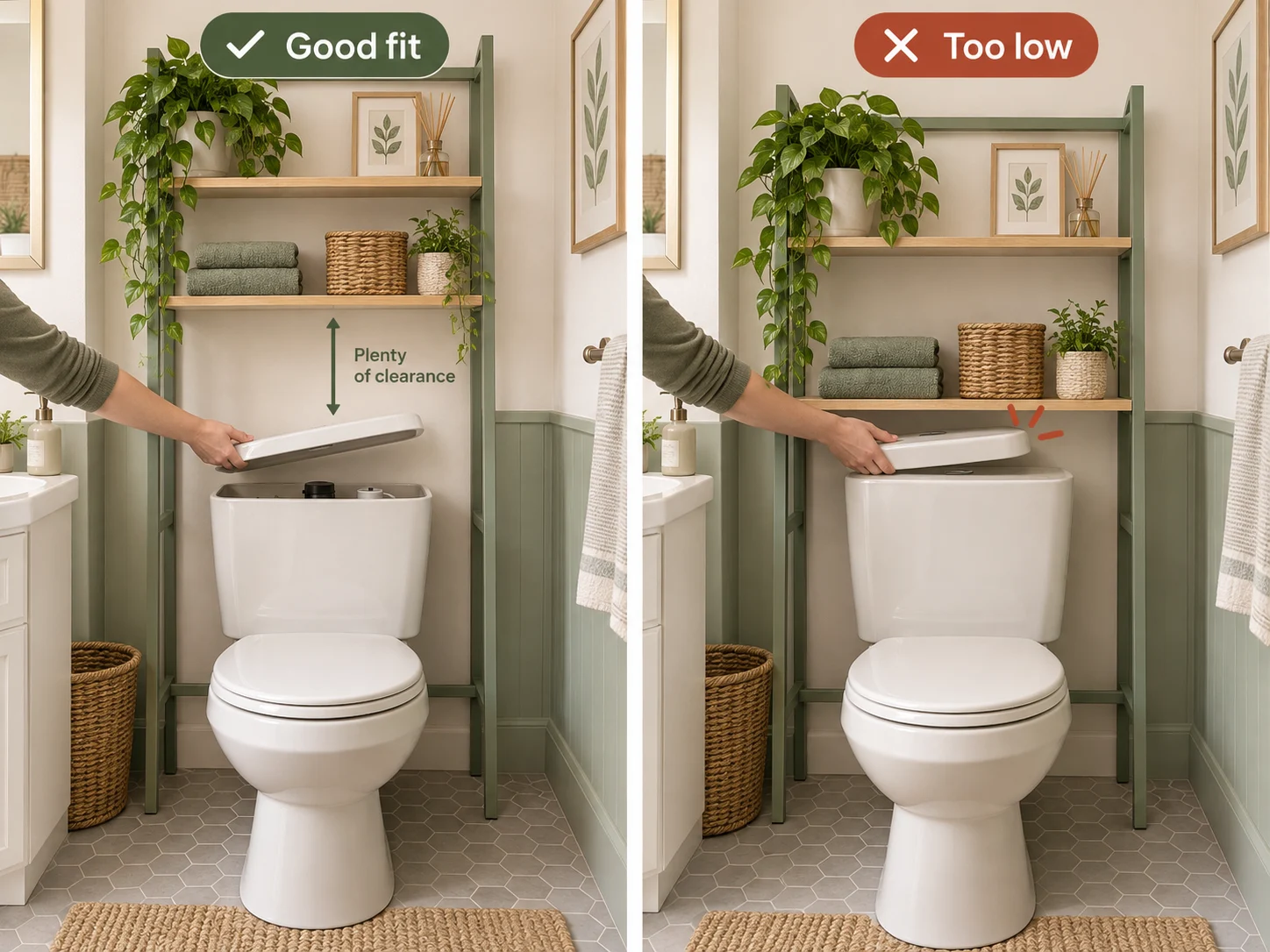
Measure the tank height and test how the tank lid actually comes off. Some lids lift straight up; others need to tilt or slide slightly. The first shelf should leave enough room for that movement plus enough hand space to work comfortably.
Footprint: measure the room you will lose
Over-toilet furniture uses vertical space, but its legs and depth still consume floor area. Measure where the feet will land, how far the shelves project forward and whether the unit will make sitting, cleaning or walking through the bathroom uncomfortable.
Plumbing: look behind the toilet
Find the shutoff valve, water supply line and any bidet hose or other plumbing. Many racks use a rear stabilizing crossbar. That bar can conflict with plumbing even when the outer width of the rack fits perfectly.
Stability: follow the actual installation requirements
Finally, check how the manufacturer expects the unit to be stabilized. Adjustable feet and cross-bracing help, but some tall freestanding units also require anti-tip anchoring. If the instructions require an anchor, do not simply skip it because you rent. Choose a different system or get permission to install it correctly.
Over the Toilet Storage for Small Bathrooms: Measure These 8 Things
Good over the toilet storage for small bathrooms starts with measurements that reflect real use, not just a tape measure across the wall. Write these numbers down before you shop.
1. Toilet tank width
Measure the widest point of the tank. The storage frame needs enough clear width around it, especially if the legs taper inward or the shelving unit narrows near the base.
2. Tank height
Measure from the floor to the top of the tank. Compare this with the height of the first shelf or rear support bar.
3. Tank-lid lift clearance
Remove the tank lid once and observe the movement. Measure how much vertical and side clearance you need to lift it off without twisting around a shelf.
4. Usable width around the toilet
Measure the space between the toilet and nearby walls, vanity, shower enclosure or trim. Storage legs should not press against the toilet or make cleaning the sides impossible.
5. Maximum acceptable depth
Measure how far the unit can project from the wall before it begins to crowd the toilet area. This is often more important than the advertised shelf depth because doors, people and cleaning tools need room too.
6. Baseboard depth
A thick baseboard can push rack legs away from the wall. Note its height and projection so the frame can sit where the manufacturer intended instead of leaning forward.
7. Plumbing and shutoff position
Record the height and side position of the shutoff valve, supply line and any rear plumbing. Compare these with crossbars, braces and lower shelves in the product diagram.
8. Door and walkway clearance
Open the bathroom door fully and check the normal walking path. A storage unit can technically fit behind the toilet and still make the room frustrating to use every day.

Quick Guide: Which Storage Type Fits Your Bathroom?
The best choice depends on what problem you are actually solving. Use this table as a starting point, then check the exact measurements and installation requirements of the product you are considering.
| Your situation | Option to investigate first |
|---|---|
| Very small budget | Narrow open metal rack |
| Want hidden visual clutter | Freestanding cabinet |
| Want a lighter look | Open shelf rack |
| Very little floor space | Compatible tension-pole system |
| Extremely tiny bathroom | Tank-top tray or compact organizer |
| Uneven floor or deep baseboard | Rack with adjustable feet and compatible frame |
| Need frequent tank access | Higher first shelf and open layout |
Option 1: Freestanding Open Rack
An open rack is often the most natural starting point for renters because it uses the vertical area above the toilet while keeping the room visually lighter than a full cabinet. Baskets, towels and toilet paper stay easy to reach, and slim metal frames can work well in tight bathrooms.
Why it works in small bathrooms
Open shelving does not create a large solid block above the toilet, so the room can feel less crowded. It is also easier to see whether the tank lid, flush control and plumbing remain accessible.
What to check before buying
Compare the leg width, first-shelf height, total depth and rear crossbar with your measurements. Pay attention to adjustable feet if the floor or baseboard makes the wall area uneven.
Freestanding does not always mean no-anchor
Some tall open racks include or require anti-tip hardware. Treat that as part of the installation, not an optional accessory. If your lease or wall construction makes the required anchoring unsuitable, choose a storage type that can be installed exactly as directed.
Option 2: Freestanding Cabinet
A freestanding over-toilet cabinet gives a small bathroom something open shelves cannot: visual concealment. Doors can hide toiletries, backups and personal-care items so the room looks calmer even when several categories are stored above the toilet.
Best when you want to hide clutter
This type works well when the bathroom needs enclosed storage more than display space. Use the lower, easiest-to-reach section for frequently handled items and reserve higher shelves for lighter, less-used supplies.
The tradeoff is weight and depth
Cabinet-style units are usually deeper and visually heavier than open racks. In a narrow room, a few extra inches of depth can matter more than an extra shelf. Mark the front edge on the floor with painter’s tape before buying so you can see how much room the cabinet will occupy.
Check doors as carefully as shelves
Make sure cabinet doors can open without striking a wall, shower enclosure, mirror or the bathroom door. Also confirm that opening the cabinet does not force you to stand in an awkward position directly over the toilet.
Installation requirements still apply
Because a cabinet is taller and heavier than a simple rack, stability matters even more. Follow the manufacturer’s leveling and anti-tip instructions exactly. If anchoring is required, factor that into the purchase decision before bringing the unit home.
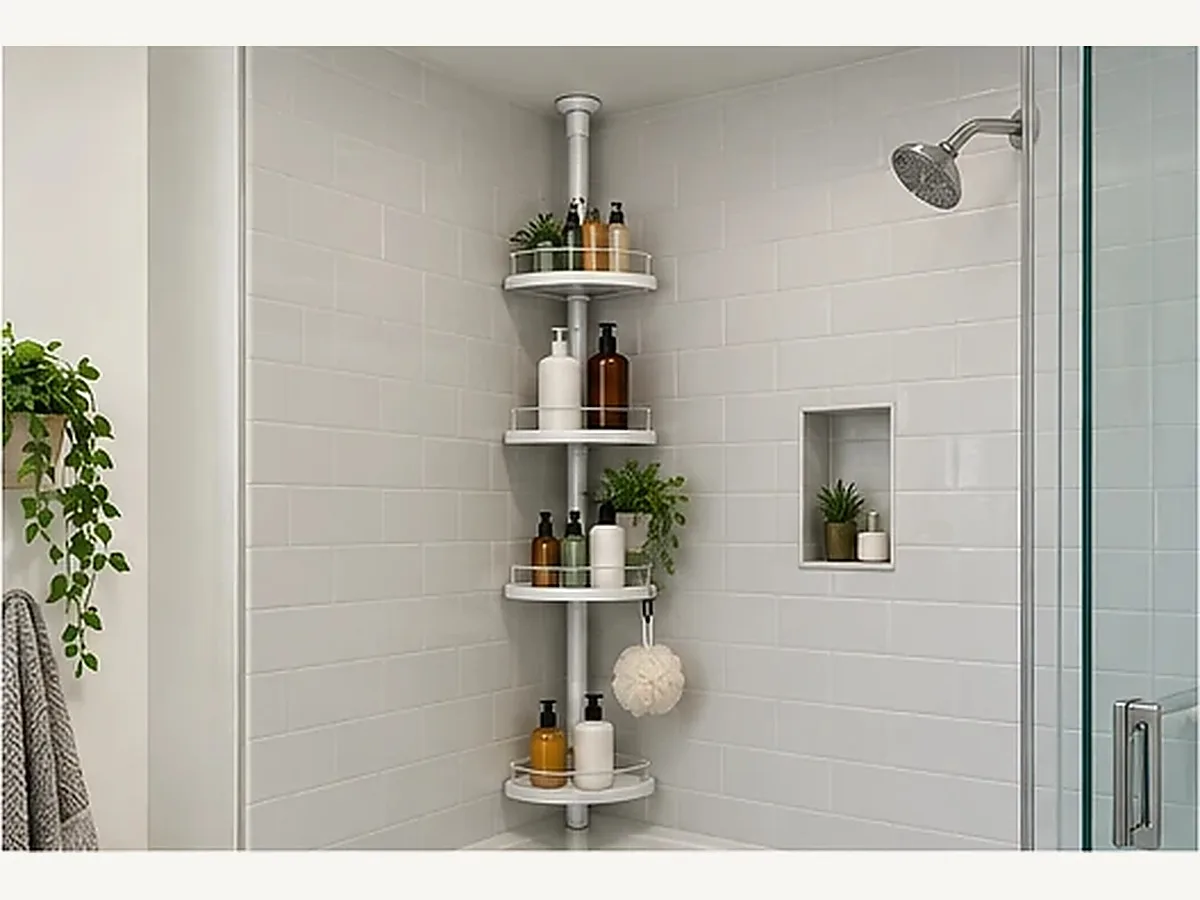
Option 3: Tension-Pole Storage
Tension-pole storage can be useful when floor space is especially tight because the system relies on vertical pressure rather than wide furniture legs. It can also appeal to renters who want to avoid adhesive on tile or painted walls.
Measure the full vertical span
Check the exact floor-to-ceiling or tub-to-ceiling height where the pole will stand. Do not assume the advertised range will work in every corner. Ceiling slope, trim and uneven surfaces can change whether the system can be installed securely.
Check the contact surfaces
The top and bottom contact points need to match the manufacturer’s requirements. A tension system that works well on flat solid surfaces may not be appropriate on a sloped ceiling or fragile finish.
Use tension storage only where it makes sense
If your main storage problem is inside the shower, our guide to shower storage without drilling compares tension, adhesive, suction and hanging methods in more detail. For the toilet area, the goal is the same: choose the mounting method that fits the actual surfaces and geometry.
Option 4: Tank-Top Trays and Compact Organizers
When a bathroom is too small for a tall rack or cabinet, the toilet tank itself can provide a small amount of storage. A shallow tray or compact organizer can hold a few lightweight essentials without adding another piece of floor-standing furniture.
Keep capacity intentionally small
This is best for items such as a tissue box, one spare toilet roll, a small basket or a limited number of daily-use products. Avoid turning the tank top into a stack of bulk supplies.
Protect tank-lid access
Anything sitting on the tank should be quick to remove when the lid needs to come off. A heavy decorative arrangement may look attractive but creates extra work every time the toilet needs attention.
Choose stability over decoration
Use a tray or organizer with a stable footprint and keep breakable or heavy objects away from the edge. The goal is useful storage with minimal friction, not to fill every inch above the toilet.
Open Shelves vs Cabinet: Which Is Better?
Both can work as over the toilet storage for small bathrooms, but they solve different problems. Open shelves usually make a compact room feel lighter, while cabinets control visual clutter. The better choice depends on what you plan to store and how much physical depth the room can tolerate.
| Feature | Open rack | Cabinet |
|---|---|---|
| Visual weight | Lighter | Heavier |
| Access | Fast | Behind doors |
| Hides clutter | No | Yes |
| Typical depth | Often lower | Often higher |
| Best for | Baskets, towels, paper goods | Toiletries and hidden backups |
If you are unsure, list the categories you actually need to store before choosing the furniture. A cabinet may be unnecessary if two baskets and a towel shelf solve the problem. An open rack may be frustrating if you mainly want to hide personal-care products.

Make Sure the Tank Lid Can Still Open
This is one of the easiest measurements to overlook. The first shelf can clear the top of the tank and still sit too low for the tank lid to be removed comfortably.
Before shopping, lift the tank lid the way you would during maintenance. Notice whether it comes straight up or needs to tilt. Measure that movement and leave working room for your hands. If you would have to remove the entire storage unit just to reach the fill valve or flush mechanism, the setup is not truly functional.
Check the rear crossbar too
Many tall racks use a horizontal bar behind the toilet for rigidity. Compare the height of that bar with the shutoff valve, supply line, bidet hose and baseboard. A rack can have enough width around the tank but still fail because the crossbar runs directly through the plumbing zone.
If a product drawing shows an adjustable rear bar, verify that its adjustment range actually clears your plumbing rather than assuming it will.
Stability Matters More Than Extra Shelves
Tall, narrow bathroom furniture can feel stable when it is empty and behave very differently after baskets, towels and toiletries are added. Evaluate the frame and installation method before comparing how many shelves each unit provides.
Look for a stable base and rigid frame
Adjustable leveling feet can help on slightly uneven floors. Cross-bracing and solid frame connections reduce side-to-side movement. A unit should sit squarely around the toilet without leaning on the tank for support.
Take anti-tip instructions seriously
If the manufacturer supplies or requires anti-tip hardware, use it as directed. The U.S. Consumer Product Safety Commission also advises consumers to follow manufacturer instructions and secure top-heavy furniture to reduce tip-over risk. See the CPSC Anchor It! guidance for broader furniture-stability information.
If you cannot anchor it, choose another system
Renting does not make it safer to ignore required hardware. If your lease, wall construction or personal preference means you cannot install a required anchor, compare a different product or mounting method instead.
What Should You Store Above the Toilet?
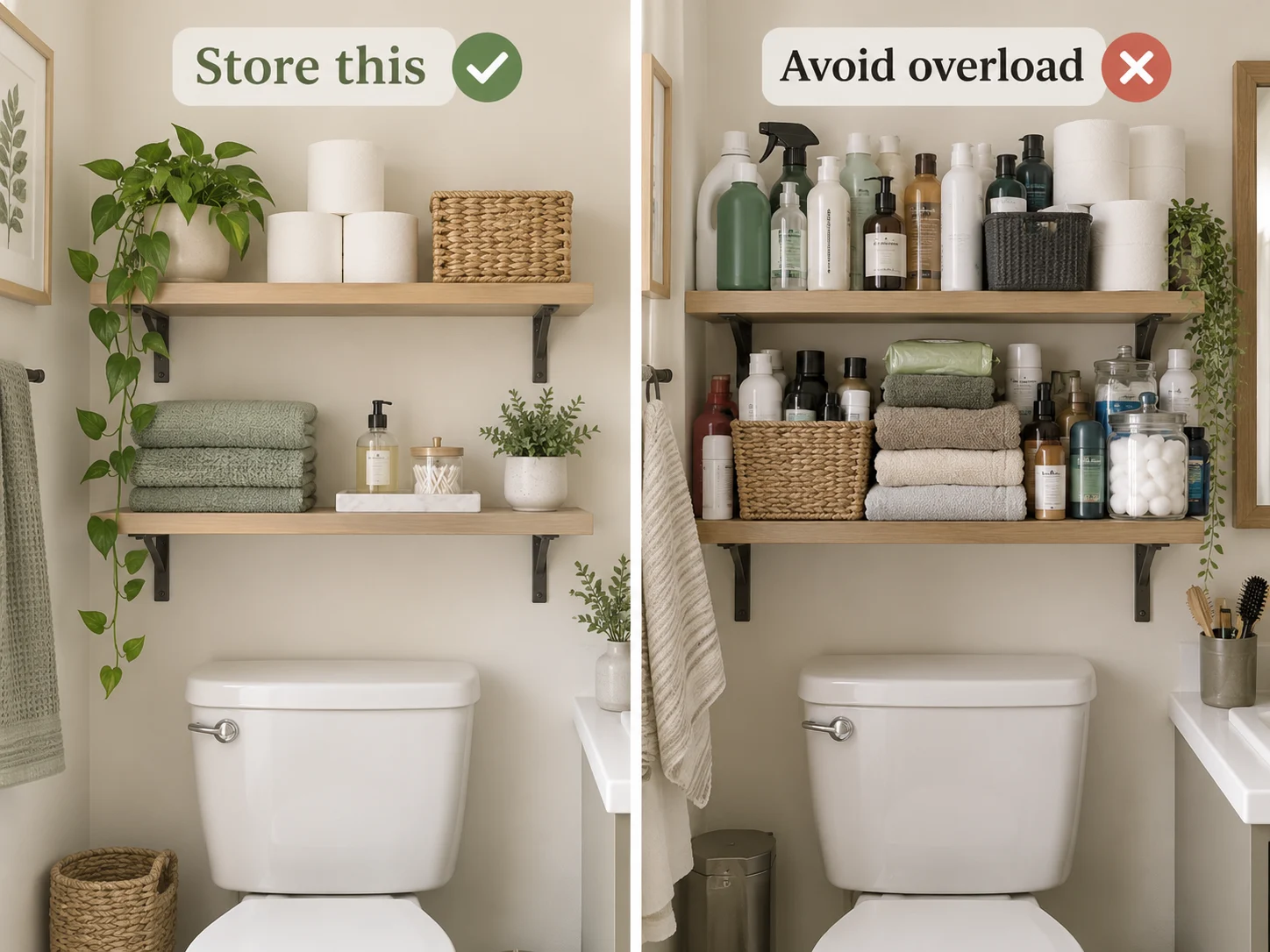
Useful over the toilet storage for small bathrooms should reduce everyday friction, not create a tall tower of backup inventory. Give the easiest-to-reach shelf to categories you actually use and keep heavier items lower.
Good candidates
Spare toilet paper, lightweight towels, washcloths, small toiletry baskets and a limited number of bathroom backups are practical choices. Matching baskets can contain small items without making open shelving look chaotic.
Keep heavier items lower
Large bottles and heavier containers are better on lower, more stable shelves when the product is rated for them. Reserve higher shelves for lighter items that are handled less often.
Do not turn the rack into a stockroom
If extra toiletries, bulk paper goods and spare towels overwhelm the unit, the problem may be inventory rather than storage capacity. Our guide on how to organize a small bathroom with no storage explains how to separate daily-use items from backups that can live elsewhere.
Storage Placement That Makes a Tiny Bathroom Feel Bigger
Storage can be functional without visually filling every inch above the toilet. Open space between shelves, a restrained number of baskets and consistent containers can make the setup feel intentional rather than crowded.
In very small rooms, lighter open frames often preserve more visual space than deep cabinets. Keep frequently used items grouped together instead of spreading individual bottles across every shelf. If the unit is tall, leave some breathing room at the top rather than decorating every available surface.
Common Over-the-Toilet Storage Mistakes
Most bad setups fail because a product was chosen from a room photo rather than from the actual toilet dimensions. Avoid these common mistakes:
- Buying before measuring the toilet tank and room.
- Forgetting that the tank lid needs to come off.
- Blocking the shutoff valve or water supply line.
- Ignoring the height of a rear crossbar.
- Choosing a unit that projects too far into the toilet area.
- Letting the rack interfere with the bathroom door or walkway.
- Assuming every freestanding unit can be used without an anchor.
- Putting the heaviest items on the highest shelf.
- Using the rack for more backup inventory than the bathroom needs.
- Skipping leveling or stability checks after assembly.
A Simple Pre-Buy Checklist
Before ordering, run through this ten-point check. If one of the measurements or installation requirements is uncertain, resolve it before buying rather than hoping the unit will adapt.
- Measure the tank width.
- Measure the tank height.
- Test how the tank lid lifts off.
- Record the plumbing and shutoff-valve position.
- Measure usable floor width around the toilet.
- Decide the maximum acceptable furniture depth.
- Measure the baseboard projection.
- Check door swing and normal walking space.
- Read the manufacturer’s anti-tip and installation requirements.
- Confirm the shelf load limits before deciding what to store.
For a large furniture piece, painter’s tape is useful: mark the proposed leg positions and front edge on the floor. Use the bathroom normally for a few minutes and see whether the footprint feels acceptable.
Frequently Asked Questions
What is the best over the toilet storage for small bathrooms?
The best option is the one that fits your tank and room, leaves maintenance access, clears plumbing and can be installed safely. In many small bathrooms, a narrow open rack feels lighter; a cabinet is better when concealing clutter matters more.
Can renters use over-the-toilet storage?
Yes. Renters can use many open racks, cabinets, tension systems and tank-top organizers, but the installation instructions still matter. Some freestanding furniture requires anti-tip wall anchoring, so check before buying.
How much clearance should there be above the toilet tank?
There is no universal number because tank lids and furniture designs vary. Leave enough space to remove the tank lid fully and reach the internal components comfortably, while also following the storage unit’s required clearances.
Is a cabinet better than open shelves above the toilet?
A cabinet is better when you want to hide toiletries and backups. Open shelves are often visually lighter and quicker to access. In a tiny room, compare depth and door movement before deciding.
Can I use over the toilet storage without drilling?
Sometimes. Tension systems and some freestanding designs can avoid conventional wall mounting, but a freestanding unit may still require an anti-tip anchor. Use the product only according to its installation instructions.
What should I store above the toilet?
Good candidates include spare toilet paper, lightweight towels, washcloths, contained toiletries and limited backups. Keep heavier items lower and avoid unstable glass objects or overloaded upper shelves.
Does over the toilet storage make a bathroom look smaller?
It can if the unit is oversized, too deep or visually crowded. A narrow frame, fewer visible products and some open space between categories can add storage without making the room feel packed.
Choose Storage That Fits the Toilet, Not Just the Wall
The most useful over the toilet storage for small bathrooms is not automatically the tallest cabinet or the rack with the most shelves. It is the unit that works with the toilet, preserves service access and fits the room comfortably.
Use the Tank-First Fit Method before you buy: Toilet → Clearance → Footprint → Plumbing → Stability. Measure the tank and lid movement, map the shutoff valve and rear plumbing, test the furniture footprint and read the installation requirements. Only then compare shelf count, finish and style.
If the toilet area is only one part of your storage problem, continue with our small bathroom storage ideas for renters for solutions around the shower, sink, walls, doors and other unused zones.